Hey there! I’m a supplier of cleaning drones, and I often get asked how these nifty little machines manage to zip around obstacles without crashing into everything in sight. It’s a super interesting topic, and I’m stoked to share the ins and outs with you. Cleaning Drone
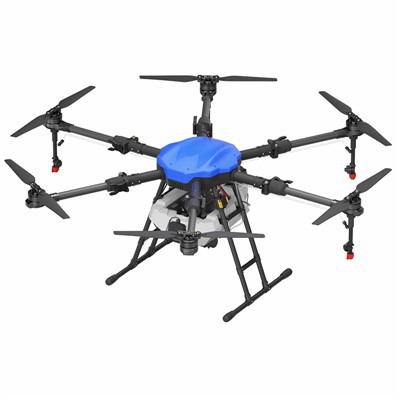
First off, let’s talk about why obstacle navigation is such a big deal for cleaning drones. These things are supposed to clean all sorts of spaces, from small apartments to large commercial buildings. There are always going to be obstacles in the way – furniture, walls, people walking around, and all sorts of random stuff. If a cleaning drone can’t navigate around these obstacles, it’s going to end up getting stuck, causing damage, or just not doing its job properly. So, having a good obstacle navigation system is crucial for a cleaning drone to be effective.
One of the most common ways cleaning drones navigate around obstacles is by using sensors. There are a few different types of sensors that are commonly used, and each has its own strengths and weaknesses.
Let’s start with infrared sensors. These are pretty simple but effective sensors that work by emitting infrared light and measuring how long it takes for the light to bounce back. If there’s an obstacle in the way, the infrared light will bounce back faster, and the drone can detect that there’s something there. Infrared sensors are great for detecting objects that are close to the drone, like walls or furniture. They’re also pretty cheap and easy to install, which is why a lot of cleaning drones use them.
However, infrared sensors do have some limitations. They can be affected by things like sunlight or other sources of infrared light, which can make it harder for them to accurately detect obstacles. They also have a limited range, so they might not be able to detect objects that are far away from the drone.
Another type of sensor that’s commonly used in cleaning drones is ultrasonic sensors. These sensors work by emitting ultrasonic waves and measuring the time it takes for the waves to bounce back. They’re similar to infrared sensors in that they can detect obstacles by measuring the time it takes for a signal to return, but ultrasonic sensors can detect objects at a greater distance.
Ultrasonic sensors are also pretty good at detecting objects in different shapes and sizes. They can work well in a variety of environments, including areas with a lot of dust or debris. But like infrared sensors, they also have their drawbacks. Ultrasonic sensors can be affected by things like wind or other sources of noise, which can make it harder for them to accurately detect obstacles.
Laser sensors, also known as LiDAR (Light Detection and Ranging), are another option for cleaning drones. LiDAR sensors work by emitting laser beams and measuring the time it takes for the light to bounce back. They can create a detailed 3D map of the environment around the drone, which allows the drone to accurately detect and navigate around obstacles.
LiDAR sensors are really accurate and can detect objects at a long distance. They’re also not affected by things like sunlight or noise, which makes them a great choice for cleaning drones that need to work in different environments. However, LiDAR sensors are also pretty expensive, which means that they’re not used in every cleaning drone.
In addition to sensors, cleaning drones also use algorithms to help them navigate around obstacles. These algorithms take the data from the sensors and use it to make decisions about how the drone should move. For example, if the sensors detect an obstacle in front of the drone, the algorithm might tell the drone to turn left or right to avoid it.
There are a few different types of algorithms that are commonly used in cleaning drones. One type is called a reactive algorithm. Reactive algorithms work by making decisions based on the current state of the environment. For example, if the sensors detect an obstacle, the reactive algorithm will tell the drone to take immediate action to avoid it.
Another type of algorithm is called a planning algorithm. Planning algorithms work by creating a plan for the drone’s movement before it starts cleaning. The algorithm takes into account the layout of the room, the location of obstacles, and other factors to create an optimal cleaning path. The drone then follows this path, making adjustments as needed to avoid obstacles.
Some cleaning drones also use a combination of reactive and planning algorithms. This allows the drone to be flexible and adapt to changes in the environment while still following an overall cleaning plan.
Now, let’s talk about how all of these technologies work together in a real cleaning drone. When a cleaning drone starts up, it first uses its sensors to scan the environment and create a map of the area. This map includes the location of walls, furniture, and other obstacles. The drone then uses its algorithms to plan a cleaning path that avoids these obstacles.
As the drone moves around the room, it continuously updates its map and adjusts its path based on the data from its sensors. If it detects a new obstacle, it will quickly react and change its direction to avoid it. This allows the drone to clean the room efficiently and without getting stuck.
One of the challenges of developing a cleaning drone with good obstacle navigation is making sure that the sensors and algorithms work together seamlessly. If the sensors aren’t accurate or if the algorithms aren’t well-designed, the drone might not be able to navigate around obstacles effectively. That’s why a lot of research and development goes into making sure that these technologies work together properly.
Another challenge is making the cleaning drone affordable. As I mentioned earlier, some of the sensors, like LiDAR, can be pretty expensive. Manufacturers have to find a balance between using high-quality sensors and keeping the cost of the drone down. This often means using a combination of different sensors and algorithms to get the best performance at a reasonable price.
So, there you have it – a rundown of how cleaning drones navigate around obstacles. It’s a combination of sensors, algorithms, and good old-fashioned engineering. At our company, we’re constantly working on improving our cleaning drones’ obstacle navigation capabilities. We’re always experimenting with new sensors and algorithms to make our drones more efficient and reliable.
If you’re in the market for a cleaning drone, I highly recommend looking for one that has a good obstacle navigation system. It’ll make a big difference in how well the drone can clean your space. And if you have any questions or are interested in purchasing our cleaning drones, don’t hesitate to reach out. We’re here to help you find the perfect cleaning solution for your needs.
Transportation Drone References
- "Robotics: Modelling, Planning and Control" by Bruno Siciliano, Lorenzo Sciavicco, Luigi Villani, and Giuseppe Oriolo.
- "Sensors and Actuators for Mechatronics" by J. W. Sheppard, R. J. Best, and A. G. Holmes.
Shandong Lesong Drone Technology Co., Ltd.
As one of the most professional cleaning drone manufacturers in China, our products have good reputation in the market. Please rest assured to wholesale high quality cleaning drone for sale here from our factory. Good service and punctual delivery are available.
Address: Yuncheng County, Heze City, Shandong Province
E-mail: Ella36988@163.com
WebSite: https://www.china-uavfactory.com/
