If you’ve ever stood next to a fan running in a closed room and strained to hear it over a conversation, or reached for your phone to turn up a video because the fan was drowning out audio, you’ve probably asked yourself: what’s the actual noise level of a quiet blower fan? As a blower fan supplier who’s talked to hundreds of HVAC techs, office managers, and even small business owners trying to avoid noisy equipment, I get how this question hits different. It’s not just about “quiet” being a nice feature—for someone installing a fan in a school library, a home theater, or a clinic where patients need rest, it’s make or break. No one wants a fan that turns a calm space into a headache. Blower Fan
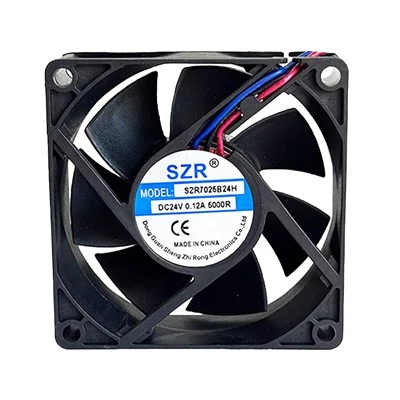
First, let’s cut through the jargon a little. When we talk about noise levels for fans, we use decibels (dB), but not the kind that makes you worry about hearing damage. The average conversation is around 60 dB, a library is about 40 dB, and a whisper is roughly 20 dB. That’s the baseline we use because it’s relatable—no one memorizes decibel charts for fun. A lot of people assume a “quiet” fan has to be silent, but that’s not realistic. Even the most well-designed blower fans make some noise; the trick is keeping it low enough that it doesn’t interfere with the space it’s in.
Now, here’s the thing: the noise of a blower fan isn’t just one number. It depends on what the fan’s doing. If it’s moving a small amount of air for a bathroom exhaust or a desktop air purifier, the noise will be way lower than if it’s pushing thousands of cubic feet per minute (CFM) for an industrial dryer or a large HVAC system. But when most customers ask for a quiet blower fan, they’re talking about the mid-range stuff—used in offices, small retail spaces, home ventilation, and even medical devices. For that sweet spot, we’re typically looking at noise levels between 30 dB and 50 dB.
Wait, let’s put that in perspective. 30 dB is about the sound of leaves rustling, or a quiet bedroom at night. A 50 dB fan is roughly the same as a normal conversation—if you’re sitting right next to it, you might hear it faintly, but if you’re across a small room, you’d barely notice. That’s the sweet spot for most quiet applications. If a fan is below 30 dB, it’s almost impossible to manufacture without sacrificing airflow or durability, and even then, it’s so sensitive that a little dust buildup or a bent blade can make it louder. On the flip side, a fan over 50 dB for a quiet space is too much—you’d find yourself raising your voice to talk, or having to turn up TVs or audio systems just to hear them over the fan.
But how do blower fans make noise anyway? It’s not just “running equals noise.” There are a few key culprits. First is air movement: when air hits the fan blades or the fan housing, it creates turbulence, which is that high-pitched whine you sometimes hear in cheap fans. Second is mechanical noise: the motor spinning, or any parts that aren’t aligned correctly, causing vibration. Even the tiniest wobble in a blade can make a fan significantly louder. Third is resonance: if the fan’s speed matches the natural vibration of the space it’s installed in, it can create a loud, annoying hum that’s way harder to block out.
That’s where our work as a blower fan supplier comes in. We don’t just sell a “quiet” fan and call it a day. We design ours to minimize those noise sources. For example, we use precision-balanced blades—each one is tested to make sure there’s no wobble, which cuts mechanical noise right there. We also use insulated fan housings; the insulation absorbs sound from the motor and air movement, so it doesn’t bounce around the ductwork or the room. A lot of cheap fans skip that insulation to save money, which is why they’re so much louder.
But here’s a common misconception: quieter doesn’t always mean weaker. Some people think a quiet fan can’t move enough air to do its job, but that’s not true. We have models that hit 40 dB while moving 1,000 CFM—enough for a small office or a home theater. The key is matching the fan’s size and speed to the space, not just cranking up the motor to get more airflow. If you install a fan that’s too big for the ductwork or room, it’ll have to work harder, which makes it louder. That’s why we always ask customers about their specific use case before recommending a fan—no one-size-fits-all here.
We recently had a customer who was installing a sound studio for a local recording artist. They’d bought a generic blower fan from a big box store, and it was 58 dB—way too loud for a space where artists need to track vocals without background noise. They reached out to us, and we swapped it for a model that hits 42 dB, and it works perfectly. They told us you can barely hear it when the studio door is closed, even when the artist is recording at a soft whisper. That’s exactly the kind of result we’re going for.
Another example: a school in a busy suburb needed ventilation for their library, which is right next to the parking lot. The HVAC contractor originally planned a standard fan that’s 55 dB, but the school was worried about noise disrupting students during study halls. We recommended a quiet blower fan that’s 45 dB, and it’s been in there for a year—no complaints, students say it’s just as quiet as before, and the air quality is way better.
Of course, there are times when even quieter fans are needed. For things like hospital patient rooms or home sleep apnea machines, we can get fans down to 28 dB. That’s quieter than a mouse’s squeak, almost unnoticeable in a quiet room. The catch is that those fans are smaller, so they’re only good for moving small amounts of air—they wouldn’t work for a whole house, but they’re perfect for their specific use.
Now, let’s talk about how to actually measure a fan’s noise level, because not every number you see online is accurate. A lot of brands post “dB levels” without saying where the measurement was taken. A fan’s noise is loudest right up against it, and it drops off as you move away—usually about 6 dB for every doubling of distance. So if a fan is 50 dB at 1 foot, it’s 44 dB at 3 feet, and 38 dB at 10 feet. A lot of brands will measure the noise right at the fan’s housing and post that, but when you install it in a duct or a room, the actual perceived noise is lower. That’s why we always include both the “free field” measurement (right next to the fan) and the “airborne” measurement (how loud it is when installed in typical conditions) for every fan we sell. That way, customers aren’t surprised when their new fan isn’t as loud as the big numbers they saw on a competitor’s website.
Another thing to consider: fan noise changes over time. Even the quietest fan will get a little louder after a few years if it’s not maintained. Dust buildup on blades, worn bearings, or loose housing parts can all add noise. That’s why we always recommend regular checks—usually once a year, you can clean the blades and tighten any parts, which keeps the noise level consistent. It’s a small step, but it makes a big difference in how long the fan stays quiet.
We also get a lot of questions about how quiet a fan can actually get. Is there a limit? From what we’ve seen, the practical lower limit for a blower fan is around 25 dB. Below that, the motor’s own magnetic fields start creating noise, and it’s almost impossible to eliminate without making the fan so big it’s not useful for most applications. So if someone is advertising a blower fan at 15 dB, that’s probably a gimmick—they’re either measuring it in a totally silent anechoic chamber (which has no background noise at all) or exaggerating the number.
At the end of the day, when you’re picking a quiet blower fan, it’s all about matching the fan to your space and your needs. You don’t need the quietest fan on the market if it’s going to be installed in a garage where you don’t spend much time, and you don’t want a loud fan in a classroom or a home theater. As a blower fan supplier, our job isn’t just to sell a fan—it’s to help people find the right balance between airflow, durability, and noise level.
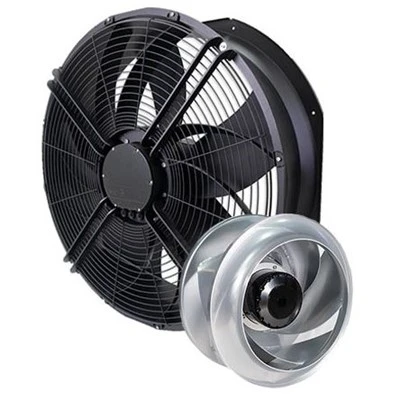
If you’re in the market for a quiet blower fan, whether it’s for a small project or a large commercial install, we can walk you through all the options. We’ve got models for every use case, from tiny medical devices to large HVAC systems, all tested to make sure they hit the noise levels we promise. Just reach out to us, tell us a little about what you need, and we’ll help you find the right fan that works for your space, no noise headaches required.
Electronics Cooling Fan References
- ASHRAE. (2021). HVAC Applications Handbook: Noise and Vibration Control. American Society of Heating, Refrigerating and Air-Conditioning Engineers.
- Beranek, L. L., & Ver, I. L. (2006). Noise and Vibration Control Engineering: Principles and Applications (2nd ed.). John Wiley & Sons.
- Air Movement and Control Association International. (2019). Standard for Sound Testing of Fans. AMCA Standard 300-19.
- Occupational Safety and Health Administration. (2022). Decibel Levels of Common Sounds. U.S. Department of Labor.
- Cengel, Y. A., & Cimbala, J. M. (2020). Fluid Mechanics: Fundamentals and Applications (4th ed.). McGraw-Hill Education.
Dongguan Shengzhirong Electronics Co., Ltd.
As one of the most professional blower fan manufacturers and suppliers in China, our products have good reputation in the market. Please rest assured to wholesale high quality blower fan made in China here from our factory. Customized orders are welcome.
Address: 6/F, Building 2, No.68, Shunxing 2nd Road, Dajingtou 2nd Industrial Zone, Dalang Town, Dongguan City, Guangdong, China
E-mail: szr_coolingfan@163.com
WebSite: https://www.szrfan.com/
