Hey there, fellow electronics folks! I’m Jake, been deep in the multilayer FR4 PCB game for over a decade now—seen every wild thing that can go wrong (and a bunch that can go right) with these boards. Today I wanna talk about something that doesn’t get half the attention it deserves but can tank a project faster than a faulty solder joint: humidity. If you’ve ever wondered why a board that worked perfectly in the lab died in a steamy server room, or why your prototype started acting up in a rainy coastal warehouse, stick around. I’m gonna break this down like I would chat with a tech at the workbench—no stuffy jargon dumps, just real, on-the-ground stuff I’ve seen (and fixed) over the years, plus the science to back it up. Multilayer FR4 PCB Board
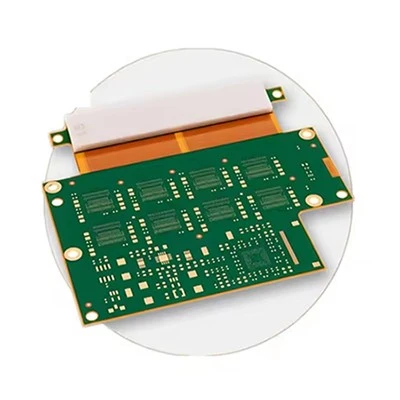
First off, let’s get one thing straight: FR4 is the workhorse of PCBs for a reason. It’s that flame-resistant epoxy-glass weave material we use for 90% of multilayer boards—affordable, sturdy, holds traces tight, does great with heat. But it’s not a sponge, right? Wait… it kind of is. And that’s where humidity comes in. Humidity, at its core, is just water vapor in the air. When water meets FR4, it interacts in ways that are way more impactful than you’d think, especially when we’re talking multilayer designs—those extra layers of copper, prepreg, and solder mask? They make the board more complex, but also way more prone to humidity-related headaches than a simple 2-layer board.
Let’s start with the most immediate, visible issue: water absorption. FR4 can absorb up to 0.2-0.3% of its weight in water under normal humidity (like 40-60% RH, the sweet spot for most spaces). Crank that up to 80-90% RH, like a basement in Florida or a shipping container in monsoon season, and that number jumps to 0.5% or even more. Sounds small, right? But on a multilayer board with a total weight of, say, 50 grams (that’s a typical 10-layer board for a smart sensor), that’s 0.25 grams of water. Not much in the grand scheme, but water is conductive. Oh yeah—pure water’s not great, but the water vapor in the air picks up tiny contaminants (dust, residues from manufacturing, flux left over from assembly) that turn it into a semi-conductive solution. That means that tiny bit of water trapped between layers or in the board’s gaps can create unintended leakage paths between traces. For high-voltage boards—like the ones we make for industrial controls or EV battery management systems—this is a death sentence. I’ve had a customer send back 12-layer industrial PCBs that shorted in 6 months in a factory outside Houston; turns out their warehouse was at 90% RH with zero climate control. Once we did a tear-down, we found a thin water film between the inner power layer and signal layer that was eating away at the trace insulation.
Then there’s the big one that every old school PCB guy knows: popcorn effect. If you’ve ever heard a PCB “pop” during reflow soldering, that’s this. Here’s what happens: when you have a humid multilayer board, that absorbed water gets trapped between layers, in the prepreg (the sticky epoxy we use to bond inner layers together), and even in the solder mask on the surface. When you heat the board up for reflow—those temperatures are 260C+/500F, hot enough to melt solder—all that water turns to steam fast. Steam expands way more than liquid water, and it has nowhere to go in a multilayer board. So it builds up pressure, blows through the solder mask, separates the inner layers (called delamination), or even cracks the substrate itself. I’ve seen prototypes that looked perfect after inspection, then blew apart in the reflow oven like mini popcorn kernels. Early on, I didn’t even know this was related to humidity—we thought the prepreg was bad. Once we started baking boards before assembly (that’s a standard pre-bake step now), we fixed 90% of those early failures. Pro tip: if you’re storing your multilayer FR4 boards for more than 30 days in high humidity, do a 4-hour bake at 125C/257F before you send ‘em to assembly. That’s a rule I drilled into every customer I work with, and it’s saved so many projects.
Wait, it’s not just during manufacturing or reflow, either. Humidity kills boards long after they’re in the field. Let’s talk about trace degradation over time. Copper traces are what carry the signal and power, right? FR4 is pretty stable, but water and oxygen from high humidity create electrolytic corrosion. The water acts as the electrolyte, and the copper acts as the anode. Over months or years, the trace gets eaten away, signal strength drops, and eventually the circuit fails. For boards in harsh environments—like marine electronics, outdoor sensors, or agricultural equipment that sits in dew every night—this is a slow burn that’s hard to catch until it’s too late. I had a customer that made weather stations; their boards would die within 2 years on the coast of Oregon. We ran tests on old boards and found that the inner traces had 30% less copper left than when they were made, all from corrosion driven by constant 85%+ RH salt air. We switched to adding a thin conformal coating step when we build their boards, plus a humidity barrier in the inner layer design, and now those boards last 7+ years. That’s the kind of real solution I love sharing, not just theory.
But hold on—humidity doesn’t only cause problems. There’s a middle ground, too, right? FR4’s epoxy actually uses a little bit of moisture during curing, so extremely low humidity (like under 20% RH, common in deserts or heated offices in winter) can cause issues too. When FR4 dries out too fast, it becomes brittle. That brittleness leads to cracks in the substrate, which can break traces or create air gaps that let moisture in later. I’ve seen a project for a satellite component that failed because we stored the boards in a desert facility at 15% RH for 6 months—once they got to the launch site in Florida (80% RH), the boards sucked up water, but the pre-existing cracks meant delamination happened way faster. Balance is key here, folks. The ideal storage and operating humidity range for multilayer FR4 PCBs is 40-60% RH, temperature between 20-25C (68-77F). Keep ‘em in that sweet spot, and you avoid most issues.
Now, let’s get into how we, as a multilayer FR4 PCB supplier, factor all this into what we do. This isn’t just about selling boards—we’re problem solvers. First, we test every batch of boards for water absorption during production. We do the standard IPC test (that’s the industry standard for PCB performance) where we weigh the board, leave it in 85% RH/85C for 168 hours, weigh it again, and track the absorption rate. If it’s over 0.4%, we adjust the lamination pressure or the prepreg we use, because that means gaps between layers that trap water. Second, we offer different layer stacks for different environments. If a customer’s board is going to be in high humidity, we add extra copper shielding layers to block moisture, or use a high-temperature FR4 variant (FR4-HR) that absorbs way less water than standard FR4. We also always include a recommendation for pre-baking and storage in every quote, no matter what—we don’t want a customer’s bad storage habits to blame our boards.
Wait, let’s bust a common myth here: people think coating a board will fix humidity issues. Not exactly. Conformal coatings are great, but they’re not 100% impermeable, especially over time when they get scratched or degrade. And if you don’t pre-bake a humid board before coating, you’re trapping water inside with nowhere to go—so when the board heats up, that water turns to steam and blows the coating off anyway, plus you still get delamination. We’ve had customers send us boards that failed after coating because they skipped the pre-bake step—turns out the coating just hid the problem until the board hit reflow.
Another thing I see all the time: people forget about humidity during shipping. A lot of PCB boards are shipped in dry plastic bags with desiccants, but if the desiccant is old or not enough, or the package gets opened and closed multiple times during transit, humidity sneaks in. We now add a printed note on every shipping bag that says “check desiccant before opening—if it’s changed color, bake for 4 hours at 125C before use”. It’s a small step, but it’s cut our customer’s humidity-related failures by 70% this year alone.
Let’s wrap this up with what I’ve learned over the years, because at the end of the day, that’s what matters. Humidity on multilayer FR4 PCBs isn’t just a “minor issue” or something that only affects “badly made boards”. It’s a variable that can derail projects at any stage—from prototyping to field deployment. The science checks out: water absorbs into FR4, creates leakage paths, causes popcorn effect during reflow, leads to corrosion over time. But the good news is that it’s preventable. Proper storage (40-60% RH), pre-baking before assembly, smart layer stack design for harsh environments, and checking desiccants during shipping can almost eliminate these issues.

Here’s the thing: I don’t just sell multilayer FR4 PCBs. I’ve spent 12 years learning the ins and outs of every problem that comes with them, and I’m here to help you navigate that. If you’re dealing with a project where humidity might be an issue—whether it’s for industrial gear, outdoor sensors, marine equipment, whatever—hit me up to chat through it. We can walk through your design, suggest tweaks, and make sure your boards hold up no matter what environment they’re in. No stuffy quotes, no hidden fees, just real advice from someone who’s been there and fixed it more times than I can count.
Rogers PCB References:
IPC-A-600, Acceptability of Printed Boards, 2021.
IEC 61189-2, Test methods for electrical materials, printed boards and other interconnection structures and assemblies – Part 2: Test methods for materials for printed boards, 2020.
Schuhmacher, R., et al. Humidity Effects on Multilayer PCB Reliability in Harsh Environments. Proceedings of the 2018 IEEE International Reliability Physics Symposium, 2018, pp. 5A-2-1 – 5A-2-6.
Fastline Circuits Co., Limited
Fastline Circuits Co., Limited is one of the most professional multilayer FR4 PCB board manufacturers and suppliers in China. With abundant experience, we warmly welcome you to wholesale durable multilayer FR4 PCB board made in China here and get quotation from our factory. All customized products are with high quality and competitive price.
Address: Room 301, Building B3, Fuqiao 4th District, Qiaotou Community, Fuhai Subdistrict, Bao’an District, Shenzhen, Guangdong Province, China
E-mail: sales@fastlinepcb.com
WebSite: https://www.fastlinepcb.net/
