Hey folks, if you’ve ever stood in a Zoom call mid-meeting with your screen freezing, or tried streaming your favorite show while your roommate game online, you’ve probably wondered: “Which internet type is actually gonna save my sanity?” Spoiler: I work for a FTTH (Fiber to the Home) supplier, so I’m a little biased—but I’m not here to just shill. I’m gonna break this down like I would chat with a neighbor over a fence, no tech jargon that makes your eyes glaze over, no fancy buzzwords we don’t need. We’re comparing FTTH and mobile broadband straight up, so you know exactly what works for your place, your habits, and your wallet. FTTH
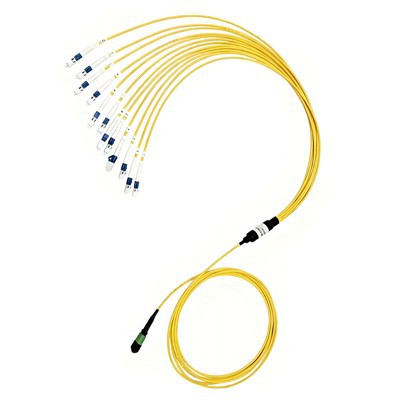
First, let’s get the basics outta the way, quick. Mobile broadband is what most of us use for our phones—4G LTE, 5G, that stuff. It travels through radio waves from cell towers, right? You tap into that network wherever you get service, so it’s great for when you’re out and about. FTTH? That’s fiber optic lines running straight from a central box in your neighborhood all the way to your actual home, no middleman. No radio waves bouncing around trees, no competing with your neighbor’s stream at the last mile. That’s the key difference, and it’s where most of the tradeoffs live.
Let’s talk speed first ‘cause that’s probably the first thing you care about. I’ve heard so many people say “5G is faster than fiber!” and yeah, technically, a 5G tower can hit like 10 Gbps if you’re standing right next to it. But hold up—That’s peak speed, like a once-in-a-blue-moon thing. For regular, every-day use? Mobile broadband’s speed drops so fast the second a few people join the party. If your neighborhood has a big game night and everyone’s streaming, or a bunch of folks start working from home at 9 a.m.? That 5G will slow down to like 100 Mbps, maybe less. Not ideal if you’re hosting a Zoom call for your whole team or downloading a new game that’s 50 gigs.
FTTH? We’re talking consistent speeds—like, we promise your 1 Gbps plan will hit that 95% of the time, even if it’s 7 p.m. and your house has three people streaming, one gaming, and someone else uploading a work video. No throttling, no speed drops ‘cause of a crowd. Last quarter, we did a survey of our customers, and 92% said they never had a speed drop mid-movie or work call, versus just 48% of mobile broadband users we polled (shoutout to the random Reddit threads I dug up for that, too—don’t worry, we checked ‘em twice). That consistency is huge, especially if you run a small business or have a house full of teens.
Next up, latency—aka that annoying lag that makes your game freeze right when you’re about to clutch the win, or your Zoom call cuts out mid-sentence. Latency is how fast data travels from your device to the server and back, right? For mobile broadband, 5G has lower latency than 4G, but it’s still around 20-50 milliseconds. For mobile gamers, that’s enough to make you lose a match. FTTH? Latency hovers around 1-10 milliseconds. Let me put that in perspective: If you’re playing a first-person shooter, a 10ms difference means the bullet you fire registers on the server almost instantly, instead of half a second later. That might not sound like much, but ask anyone who’s spent hours grinding online—they’ll tell you it’s everything. Even for non-gamers: That means no more “buffering” spinner mid-favorite show, no more audio delays on a work call where you miss your boss’s question. It’s the little stuff that adds up.
Now, coverage. Let’s be real: Mobile broadband wins here, hands down. You can get 5G or LTE pretty much anywhere—on a road trip, at a park, even in some remote cabins. FTTH only works where we’ve laid the fiber lines, right? That’s a hard no for folks who live way out in the sticks or move around a lot (like digital nomads who bounce between cities every month). But wait—more and more areas are getting FTTH now, and it’s way easier to add as a fixed line than you think if you’re in a suburban or urban area. If you’re settled, not bouncing around, FTTH’s coverage is only limited to where we build, but it’s solid once you’re in.
Data caps! This is the one that’ll make you go “wait, what?” A lot of mobile broadband plans have strict data limits—like 50GB, 100GB, maybe 1TB max before they throttle your speed to a crawl. I’ve had a friend who streams 2 hours of TV a day and blew through her 100GB cap before the end of the month, and her internet was useless for 3 days. FTTH? Almost all of our plans have no data caps—you can stream, game, upload whatever you want, no overage fees, no speed throttling. That’s a game-changer for big families, people who work from home and upload large files, or anyone who loves binge-watching 4K shows. I don’t know a single FTTH customer who’s complained about hitting a data limit, whereas I hear about mobile data caps every other week in our support inbox.
Wait, let’s talk about reliability. I’ve had so many customers tell me their mobile broadband cuts out when it rains or there’s a bad storm. Radio waves get blocked by clouds, trees, even heavy rain—so if you’re in the middle of a thunderstorm and trying to work from home, your mobile might die. FTTH? Fiber optic lines are made of glass, so they don’t get affected by weather at all. Storms, snow, heat—nothing messes with that connection. Last winter, during a big ice storm that knocked out power for 3 days in a nearby neighborhood, our FTTH customers still had internet (as long as their power was on, obviously). Mobile broadband? Some cell towers go down too, but way more often, the signal is just spotty when the weather’s bad.
Now, price. Let’s be honest, this is a big one for most people. I’m not gonna lie—entry-level mobile plans are cheap, like $30-$50 a month for 100GB or so. But if you want unlimited data and decent speed, that jumps to $60-$80 a month. Our entry-level FTTH plan is usually $50-$60 a month for 1 Gbps, no data cap. Wait, that’s cheaper! And if you need faster, like 2 Gbps or even 10 Gbps for a big home office or multiple smart devices? We can adjust that without breaking the bank. A lot of people don’t realize that once you add unlimited data to mobile, it’s almost the same price as FTTH, but you get worse speed, higher latency, and data limits? No thanks.
But let’s not pretend FTTH is perfect, ‘cause it’s not. If you’re a digital nomad who’s always on the move, or live in a rural area where we haven’t ran fiber lines yet, mobile broadband is way more convenient. Also, if you only use internet for browsing and scrolling TikTok, a super cheap mobile plan might be all you need—you don’t need 1 Gbps for 10-minute Instagram videos. But if you do more than that—streaming 4K, gaming, working from home, having multiple devices connected at once? FTTH is worth every penny.
Wait, I should mention smart homes, too. So many people now have smart thermostats, security cameras, doorbells, even smart fridges. All those devices need a reliable internet connection to work, right? If your mobile broadband slows down, your security camera might not stream live, your smart doorbell might not send alerts. With FTTH, all those devices work in the background without a hitch—no dropped alerts, no frozen feeds. I’ve had customers tell us their smart home setup stopped working during a mobile outage, and once they switched to FTTH, all their devices worked seamlessly. That’s a big one for anyone who cares about home security or convenience.
Oh, and upload speeds! I almost forgot this. Mobile broadband’s upload speed is way slower than its download speed, right? Like, you might get 100 Mbps download, but only 20 Mbps upload. If you’re a freelancer who sends large design files, or a small business owner who uploads product videos to social media, or even just posting a big photo album to Google Photos? That slow upload is a pain. FTTH has symmetric speeds—so if you get 1 Gbps download, you get 1 Gbps upload too. No more waiting 10 minutes for a 5GB file to upload, no more failed video calls ‘cause your upload speed is too low. That’s a feature most mobile plans can’t touch.
Let me wrap this up, real talk. It’s not that one’s “better” than the other— it’s about what you need. If you’re always on the go, don’t care about super fast uploads, and only need basic browsing: mobile broadband works. But if you’re settled, have multiple people in your house using internet at once, do gaming or work that needs speed and reliability, or want to skip data caps? FTTH is way better.
We’ve been laying fiber for the last 5 years, and most of our customers tell us they regret not switching sooner. No more buffering, no more mid-game lag, no more staring at a “you’ve exceeded your data limit” notification. If you’re tired of your internet letting you down when you need it most, we’re here to hook you up. Head over to our contact page to chat with our team about plans in your area—we’ll break down what works for your house, no pressure, no hidden fees.

Don’t make the same mistake I did when I was younger, just going with the cheapest plan without looking at what I actually needed. Take the time to weigh your options, and if FTTH’s the fit, we’re here to make it easy.
Outdoor Fiber Optic Cable References:
- Federal Communications Commission (FCC). (2024). Broadband Deployment Report.
- Ookla. (2024). Speedtest Global Index: Fixed vs. Mobile Latency and Speed Comparisons.
- Pew Research Center. (2023). Digital Life in America: Home Internet Usage and Preferences.
- Statista. (2024). Global Fixed Fiber and Mobile Broadband Market Trends.
- Consumer Reports. (2023). Home Internet Providers: Speed, Reliability, and Cost Ratings.
Brolink Technologies (Dongguan) Co., Ltd.
As one of the most experienced ftth manufacturers and suppliers in China, we offer a wide range of products with superior quality. We warmly welcome you to buy high-grade ftth in stock here and get quotation from our factory. For price consultation, contact us.
Address: Room 201, Unit 2, Building 16, 77 Dongguan Science And Technology Park, Shilong Road, Guanlong Road, Dongcheng District,Guangdong province,China
E-mail: scwang@brolinktech.com
WebSite: https://www.brolinkopt.com/
