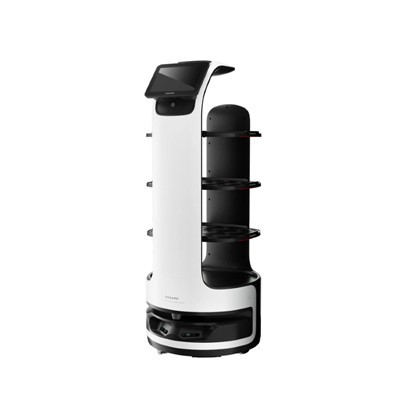
Integrating sensors with a robot controller is a crucial step in enhancing the capabilities and functionality of robotic systems. As a leading supplier of robot controllers, I’ve witnessed firsthand the transformative impact of seamless sensor integration on robot performance. This blog will delve into the key aspects of integrating sensors with a robot controller, offering insights and practical tips based on my years of experience in the field. Robot Controller
Understanding the Basics of Sensor – Robot Controller Integration
Before we dive into the integration process, it’s essential to understand the roles of sensors and robot controllers in a robotic system. Sensors are devices that detect and measure physical properties such as light, temperature, pressure, and motion. They provide the robot with information about its environment, enabling it to make informed decisions. On the other hand, a robot controller is the brain of the robot. It processes the data received from sensors, executes control algorithms, and sends commands to the robot’s actuators to perform specific tasks.
The integration of sensors with a robot controller involves establishing a communication link between the two components so that the controller can receive and interpret the sensor data accurately. This communication can be either wired or wireless, depending on the requirements of the application.
Types of Sensors Commonly Used in Robotic Systems
There are various types of sensors used in robotic systems, each serving a specific purpose. Here are some of the most common ones:
1. Proximity Sensors
Proximity sensors detect the presence or absence of an object within a certain range. They are widely used in robots for collision avoidance, object detection, and positioning. For example, in an industrial robot, proximity sensors can be used to detect when a workpiece is within reach, allowing the robot to pick it up precisely.
2. Vision Sensors
Vision sensors, such as cameras, provide robots with visual information about their environment. They can be used for tasks like object recognition, inspection, and navigation. For instance, in a warehouse robot, a vision sensor can be used to identify different types of packages and their locations, enabling the robot to pick and place them efficiently.
3. Inertial Measurement Units (IMUs)
IMUs measure the robot’s orientation and acceleration. They are essential for robots that need to maintain balance and stability, such as humanoid robots. By providing real – time information about the robot’s motion, IMUs allow the controller to adjust the robot’s movements accordingly.
4. Force – Torque Sensors
Force – torque sensors measure the forces and torques applied to the robot’s end – effector. They are used in applications where the robot needs to interact with objects delicately, such as in assembly tasks. For example, a force – torque sensor can help a robot apply the right amount of force when screwing a bolt, preventing over – or under – tightening.
Steps for Integrating Sensors with a Robot Controller
Step 1: Define the Requirements
The first step in integrating sensors with a robot controller is to define the requirements of the application. This includes identifying the types of sensors needed, the accuracy and resolution required, the sampling rate, and the communication protocol. For example, if the robot is used for precision assembly, high – accuracy force – torque sensors and vision sensors with high resolution may be required.
Step 2: Select the Appropriate Sensors and Controller
Based on the requirements, select the appropriate sensors and robot controller. Consider factors such as compatibility, reliability, and cost. As a robot controller supplier, our controllers are designed to be compatible with a wide range of sensors, ensuring seamless integration. We also provide technical support to help you choose the right combination for your application.
Step 3: Establish Communication
Once you have selected the sensors and controller, establish a communication link between them. This may involve using a specific communication protocol, such as SPI (Serial Peripheral Interface), I2C (Inter – Integrated Circuit), or Ethernet. Make sure to follow the manufacturer’s guidelines for wiring and configuration to ensure reliable communication.
Step 4: Calibrate the Sensors
Calibration is an important step in sensor integration. Calibrating the sensors ensures that the data they provide is accurate and reliable. Follow the calibration procedures provided by the sensor manufacturer, and periodically recalibrate the sensors to maintain their accuracy over time.
Step 5: Develop and Implement Control Algorithms
After the sensors are integrated and calibrated, develop and implement control algorithms in the robot controller. These algorithms should be designed to process the sensor data and generate appropriate control signals for the robot’s actuators. For example, if a proximity sensor detects an object in the robot’s path, the control algorithm should instruct the robot to stop or change its direction.
Step 6: Testing and Validation
Finally, test and validate the integrated system. Conduct a series of tests in a controlled environment to ensure that the robot can perform its tasks accurately and safely. Monitor the performance of the sensors and the controller, and make any necessary adjustments to the system.
Challenges and Solutions in Sensor – Robot Controller Integration
One of the main challenges in sensor – robot controller integration is dealing with the large amount of data generated by the sensors. This data needs to be processed quickly and efficiently to ensure real – time response of the robot. To address this challenge, use high – performance controllers with sufficient processing power and memory. You can also implement data filtering and compression techniques to reduce the amount of data that needs to be processed.
Another challenge is ensuring the reliability and robustness of the sensor – controller communication. Factors such as electromagnetic interference, signal attenuation, and network congestion can affect the quality of the communication. To mitigate these issues, use shielded cables, appropriate communication protocols, and error – correction techniques.
Conclusion

Integrating sensors with a robot controller is a complex but rewarding process that can significantly enhance the capabilities of robotic systems. By following the steps outlined in this blog and addressing the challenges effectively, you can achieve a seamless integration that enables your robot to perform its tasks with high accuracy and efficiency.
Cleaning Service Robot As a trusted robot controller supplier, we are committed to providing you with the best – in – class controllers and comprehensive support for sensor integration. If you are interested in learning more about our products or have any questions regarding sensor – robot controller integration, we invite you to contact us for a detailed discussion. Our team of experts will be happy to assist you in finding the right solutions for your robotic applications.
References
- Siciliano, B., & Khatib, O. (Eds.). (2016). Springer Handbook of Robotics. Springer.
- Craig, J. J. (2005). Introduction to Robotics: Mechanics and Control. Pearson Prentice Hall.
- Spong, M. W., Hutchinson, S., & Vidyasagar, M. (2006). Robot Modeling and Control. Wiley.
Hangzhou Janz Intelligent Technology Co., Ltd.
As one of the most professional robot controller manufacturers and suppliers in China, we offer a wide range of products with superior quality. Please feel free to buy advanced robot controller at competitive price from our factory. Contact us for quotation.
Address: Room 240, 2nd Floor, 289-16, Creative Road, Yinhu Street, Fuyang District, Hangzhou City, Zhejiang Province
E-mail: amy@hzjanz.com
WebSite: https://www.simplexrobots.com/
