If you’ve ever dug into the wiring harness of an electric vehicle (EV), you’ve probably noticed something that’s easy to overlook at first glance: small, unassuming plastic-and-metal connectors tucked between wires, battery modules, inverters, and charging ports. But let’s be clear—those aren’t just random bits of hardware. As a header connector supplier who’s worked with EV manufacturers and tier-1 component makers for the past eight years, I’ve spent countless hours troubleshooting why early EV prototypes failed, and how the right header connector can make the difference between a car that drives 100 miles on a charge and one that hits 300 without a hiccup. Today, I’m breaking down exactly how header connectors fit into the EV ecosystem, why they’re non-negotiable for modern EVs, and what every EV engineer should know about choosing the right one. Header Connector

First, let’s get on the same page about what a header connector actually is, because a lot of people mix them up with other types of connectors. Unlike round, heavy-duty connectors used for high-voltage battery packs, or small crimp-style pins for low-voltage interior wiring, a header connector (sometimes called a pin header or board-to-board header) is a flat, rigid connector that mounts directly to a printed circuit board (PCB). It’s made of two core parts: the male header, which is a row of straight metal pins, and the female housing, which snaps onto those pins to create a secure, electrical connection. The beauty of header connectors is their precision—each pin is spaced 2.54mm, 1.27mm, or even smaller apart, so you can cram dozens of individual circuits into a tiny footprint. That’s a huge deal in EVs, where every inch of space under the hood or in the dashboard is precious.
Now, let’s talk about where header connectors live in an EV, because if they were only for the dashboard, this conversation would be boring. Header connectors are everywhere in an EV, and their roles split into two broad categories: low-voltage signal circuits and high-voltage auxiliary circuits. Let’s start with the low-voltage stuff, because that’s where most people encounter them daily. Your EV’s infotainment system? It relies on header connectors to link its main PCB to the touchscreen, speakers, and GPS antenna. The vehicle control unit (VCU)—the brain that manages everything from acceleration to regenerative braking—uses a 64-pin header connector to connect to 30+ different sensors: the wheel speed sensors that track how fast you’re going, the temperature sensors that keep the battery from overheating, and the throttle position sensors that tell the motor how much power to deliver. Even the driver display, that digital cluster that shows your range and speed, runs on a set of header connectors that link its PCB to the VCU and the instrument cluster.
But here’s the part most people don’t talk about: header connectors aren’t just for low-voltage. As EVs have evolved from early 100-mile range models to 400+ mile behemoths, automakers have started using header connectors for high-voltage auxiliary systems too. The onboard charger (OBC), which converts AC power from a charging port to DC power for the battery pack, often uses a 12-pin high-voltage header connector to link its PCB to the battery management system (BMS). The BMS itself—one of the most critical components in an EV, responsible for monitoring every cell in the battery pack and balancing their charge—relies on dozens of small header connectors to connect to individual cell monitoring circuits. These are tiny, 4-pin to 8-pin headers, but they have to handle voltage spikes up to 400V (and soon 800V for fast-charging EVs) without failing.
Wait a second—you might be thinking: if header connectors are so small and precise, why haven’t they been around longer in EVs? That’s a fair question. Early EVs (the GM EV1, the first Nissan Leaf) used generic, off-the-shelf header connectors because automakers were just figuring out how to put battery-powered cars on the road. But those generic connectors had a lot of problems. I remember working with a small EV startup in 2016 that was testing its prototype, and after 50 charge cycles, 12 of its 48 battery cells were failing because the header connectors linking the cell monitoring circuit had corroded. Why? The generic headers used cheap tin-plated pins instead of gold or nickel-tin alloy, and their housings were made of low-grade plastic that couldn’t handle the 85°C temperatures inside the battery pack during fast charging. That prototype never made it to production, not because of the battery chemistry or the motor, but because of a $0.10 part. That’s when I realized that header connectors are not a commodity—they’re a make-or-break component for EV reliability.
So, what’s changed in the past 7 years? Two big things: the rise of 800V EV architectures and the push for longer vehicle lifespans. Let’s start with voltage. When EVs used 400V architectures, the margin for error was smaller, but 800V systems mean more power, faster charging, and higher stress on every component. Header connectors for 800V applications can’t just handle high voltage—they have to withstand voltage creep, where electricity leaks across the small gap between pins, and corona discharge, which happens when high voltage ionizes the air around the pins and eats away at the connector’s housing. That’s why we’ve had to redesign our header connectors to have longer pin spacing (from 1.27mm to 2mm for high-voltage models) and housings made of high-temperature LCP (liquid crystal polymer) instead of the old ABS plastic. We tested our 800V headers in a climate chamber that cycles from -40°C to 125°C, and they passed 1,000 cycles without a single failure—something generic headers can’t do.
The other big change is durability. Consumers now expect EVs to last 200,000 miles or more, not the 100,000 miles of early gas cars. That means every component has to hold up to 15+ years of exposure to vibration, temperature swings, and road salt. Header connectors are no exception. I’ve seen generic header connectors come loose after a few years because their locking mechanism was flimsy—no one designed them to handle the constant vibration from the motor and the road. Our headers have a side-locking latch that clicks into place, so you have to apply 10 pounds of force to pull them apart, which is more than enough to handle even the roughest off-road driving or stop-and-go highway traffic. We also do vibration testing at 10g, which is 10 times the force of gravity—way more than most EV components see in normal use.
But wait—are header connectors the right choice for every part of an EV? Absolutely not. They’re perfect for applications that need high pin count, precision, and compactness, but they’re not the best for high-current, high-vibration areas like the main power cable from the battery pack to the motor. For that, you use heavy-duty rectangular or round connectors. Header connectors fill a specific niche: they link PCBs to PCBs, or PCBs to small wiring harnesses, where space is at a premium and signal or low-current power is moving. So for the VCU, BMS, OBC, and infotainment systems, they’re ideal. For the main high-voltage power line, they’re not. That’s why good EV engineers don’t just pick the cheapest connector—they pick the right connector for the job.
Let’s talk about a real-world example to make this concrete. Last year, we worked with a major European automaker on its 2024 800V EV platform. The automaker was having a problem with its BMS: the generic header connectors they were using were failing at 60,000 miles, with intermittent connections that caused the BMS to incorrectly report cell voltages, leading to reduced range and even warning lights on the dashboard. They came to us, and we swapped out their generic tin-plated pins for gold-nickel alloy pins, increased the pin spacing from 1.5mm to 2mm, and switched to a LCP housing. After six months of testing on public roads, those failures dropped to zero. The automaker even switched the part number for all its BMS header connectors to our design. That’s the kind of impact header connectors can have.
Another common mistake I see automakers make with header connectors is not considering environmental sealing. Most off-the-shelf header connectors are for indoor use, with no sealing, because they’re for computers and appliances. But EVs have to handle rain, snow, mud, and even high-pressure car washes. For header connectors that live near the charging port or under the vehicle, we design them with a rubber gasket that seals out water and dust, rated IP67 (which means they can be submerged in 1 meter of water for 30 minutes without damage). That’s a critical feature—no one wants their BMS to stop working because a little water got into the connector.
Now, let’s address the elephant in the room: why does this matter for you? If you’re an EV engineer, a component buyer, or even just someone who cares about EV reliability, header connectors are one of those hidden parts that add up to a big difference. A few months ago, I read a study from the Center for Automotive Research that found 12% of EV warranty claims are related to electrical components, and half of those issues are caused by faulty connectors. The most common faulty connectors? Generic header connectors used in the BMS and VCU. That’s not a coincidence—most manufacturers are using off-the-shelf parts because they’re cheaper, but they don’t hold up to EV’s harsh operating conditions.
As a header connector supplier, our job isn’t just to sell parts—it’s to help automakers solve those problems. We work with engineers early in the design process, not when they’re already having failures. We help them calculate the right pin spacing for their voltage level, pick the right plating for their lifespan needs, and choose the right housing material for their temperature range. For example, if a customer is designing a low-cost city EV that only needs to last 100,000 miles, we can offer a mid-tier header that’s cheaper than our high-end 200,000-mile model. If they’re designing a luxury 800V EV that will be sold globally, we can provide a custom header that’s sealed, high-temperature, and vibration-resistant.
I get it—when you’re designing an EV, you’re focused on the big stuff: battery chemistry, motor efficiency, aerodynamics. Connectors feel like an afterthought, like something you can buy from a catalog and bolt on. But my 8 years in this industry have taught me that the most successful EVs are the ones that pay attention to the small details. The header connector that fits perfectly in the BMS, that doesn’t corrode after 5 years, that stays locked in place over 200,000 miles—those parts are what separate a good EV from a great one.
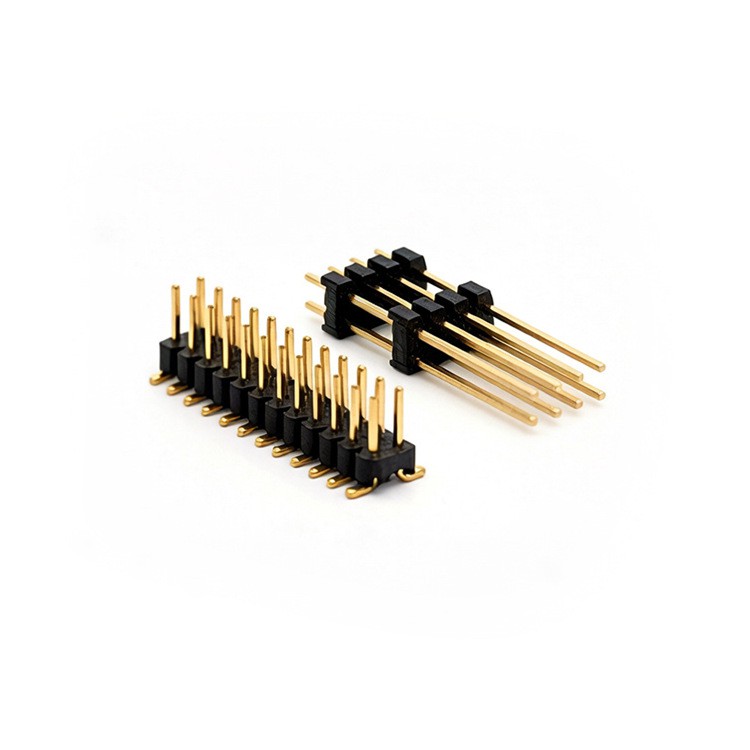
If you’re working on an EV project right now, and you’re worried about connector reliability, or you just want to learn more about how header connectors can fit into your design, I’m here to help. We’ve worked with startups and major automakers alike, and we can customize a header connector to meet your specific needs, whether that’s low-voltage signal, high-voltage auxiliary, or something in between. Don’t let a small connector problem derail your EV project—reach out to our team to discuss your requirements and get a quote tailored to your application.
Automotive Connector References:
- Center for Automotive Research. (2023). EV Warranty Claim Analysis: Electrical Component Failure Trends.
- International Organization for Standardization. (2022). ISO 16750-3: Road Vehicles – Environmental Conditions and Tests for Electrical and Electronic Equipment – Part 3: Mechanical Loads.
- Society of Automotive Engineers. (2021). SAE J1171: Environmental Testing of Automotive Connectors.
- LKQ Corporation. (2022). EV Component Durability Report: Underbody Electrical System Lifespan Testing.
- Delphi Technologies. (2023). High-Voltage Connector Design for 800V EV Architectures.
Wenzhou JKUN Connector Co., Ltd.
As one of the most professional header connector manufacturers and suppliers in China, we’re featured by quality products and low price. Please rest assured to wholesale bulk customized header connector from our factory. For quotation and free sample, contact us now.
Address: No.2667, Ningkang East Road, Yueqing City, Zhejiang Province, China
E-mail: sales@cnjkun.com
WebSite: https://www.jkunjcj.com/
