Hey everyone, thanks for stopping by my corner of the shop—today I want to talk about something I get asked like, every single week: what’s the actual difference between a light-duty metal lathe and a heavy-duty one? Since I run a metal lathe supply business, I don’t just regurgitate textbook definitions here— I’ve got hands-on experience with both, from helping a high school auto shop pick their first lathe to outfitting a fabrication shop that runs 12-hour days, so let’s break this down like real guys would, no stuffy jargon. Metal Lathe
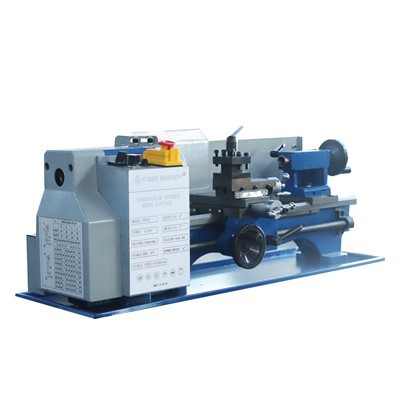
First off, let’s talk about who each lathe is for, because that’s the biggest starting point. Light-duty lathes? Those are the ones you’ll find in small garages, high school or college trade programs, hobbyist workshops, or maybe a startup machine shop that only does small, low-volume jobs. I’m talking about guys turning small parts—like a replacement bolt for a lawnmower, a custom guitar neck, or a small batch of brackets for a bike frame. A lot of new customers come to me confused because they think “all lathes are the same” until they try to turn a chunk of 2-inch steel on a small hobby model and watch it wobble like a kid on a bike for the first time.
Heavy-duty lathes? These are the workhorses. You’ll see them in industrial machine shops, aerospace parts facilities, shipyards, or anywhere you’re running big, dense materials nonstop. Last year I sold a set of heavy-duty lathes to a company that makes drilling rig parts—they’re turning 10-inch steel shafts every day, 8 hours a shift, and they need something that doesn’t quit after an hour of hard work. If you’re making parts that are over, say, 6 inches in diameter, or running 24/7 for production runs? This is your guy.
Now let’s get into the actual specs, because that’s where the rubber meets the road. Let’s start with the bed—oh, the bed is non-negotiable. Light-duty lathe beds are usually made of cast iron, but thin cast iron, like 2 to 3 inches thick. It’s lightweight, so you can move it around if you need to (most come with legs or a stand, even some mobile bases) and it’s good for small loads, but it flexes if you put too much pressure on it. I once had a hobbyist customer bring in his home lathe that he’d tried to turn a 5-inch steel disc on—bed flexed so bad the headstock shifted, and he ended up with a wobble so bad the part was useless, not to mention he almost messed up the whole lathe.
Heavy-duty lathe beds? They’re thick cast iron, like 5 to 8 inches thick, sometimes even reinforced with ribs underneath to spread the weight. No flex here—when you’re turning a 12-inch titanium rod at 500 RPM, you need that bed to stay dead straight, otherwise every cut is off. These lathes are almost always bolted to the floor, too—they’re way too heavy (some of these things weigh 2,000 pounds or more) to move around, and that fixed installation keeps them stable under that kind of pressure.
Next up, spindle power. That’s the engine of the lathe, plain and simple. Light-duty lathes have motors usually between 1 to 5 horsepower (HP). That’s enough for soft stuff like aluminum, brass, or small steel parts up to, like, 3 inches in diameter. If you try to push that—like turning a 4-inch steel shaft—you’ll hear the motor strain, maybe even smell it burning. I’ve had to swap out more than a few hobbyist lathe motors because they overworked them on a job that was way too big.
Heavy-duty lathes? Motors start at 7.5 HP and go up to 25 HP, even more for the really big ones. That torque is what you need for cutting through dense, thick metals. Those drilling rig shafts I mentioned earlier? They’re using 20 HP motors, because turning steel that thick takes serious grunt. No straining here—you can run 10-hour days cutting big parts without the motor breaking a sweat.
Then there’s the swing capacity and bed length. Swing is the maximum diameter of a part you can spin on the lathe, right? Light-duty lathes have swings from about 12 inches up to 18 inches, max. Bed length is usually 2 feet to 6 feet—so the longest part you can turn is like 5 feet. That’s perfect for small parts, but if you need to turn a 10-foot long steel beam for a construction bracket? You’re out of luck with a light-duty one.
Heavy-duty lathes have swings starting at 20 inches, going all the way up to 48 inches or more. Bed lengths? We’re talking 8 feet, 12 feet, even 20 feet for the industrial ones. A lot of these are called “engine lathes” for heavy production, and you’ll see them turning huge parts like turbine shafts or tank components. No hobbyist needs a 20-foot bed, that’s for sure.
Tool capacity is another big one. Light-duty lathes use small tool posts, usually for 1/4-inch or 3/8-inch cutting tools. That works for small cuts, but if you need to remove a lot of material from a thick steel part, those tiny tools can’t handle the pressure—they’ll chip or break. Also, most light-duty lathes only have a few speed settings, maybe 8 to 12, because they don’t need a ton of variation for small jobs.
Heavy-duty lathes have much larger tool posts, often for 1-inch or bigger cutting tools. Those are built to take heavy cuts, remove big chunks of metal fast, which is perfect for production runs. And the speed settings? Some have 20 or more, plus variable speed control, so you can dial in exactly the right RPM for whatever material you’re working with—from soft brass at high speed to tough stainless steel at slow, steady speed. That level of control isn’t worth the extra cost for a hobbyist, but for a shop cranking out parts all day, it’s essential.
Wait, let’s talk about durability and maintenance, because that’s where a lot of people go wrong when picking a lathe. Light-duty lathes are built for occasional use—like a hobbyist working on weekends, or a school shop using them for 4 hours a day. The parts are made of thinner, less expensive materials, so they wear out faster if you use them hard. You might have to replace bearings or gears in a light-duty lathe after 5 years of heavy use.
Heavy-duty lathes are built for continuous, heavy use. The gears are larger, the bearings are industrial-grade, everything is overbuilt so it can handle running 8, 10, even 24 hours a day. One customer of mine runs a shipyard—they have 3 heavy-duty lathes that have been going strong for 18 years, with only regular oil changes and bearing checks, no major overhauls. Yeah, they cost more upfront, but they last way longer and pay for themselves in less downtime and less replacement parts.
Oh, and cost—let’s be real, that’s a big factor for most people. A good light-duty metal lathe will set you back anywhere from $1,500 to $5,000, depending on size and features. That’s manageable for a hobbyist or a small startup. A heavy-duty lathe? That’s $10,000 and up, and the big industrial ones can go for $50,000 or more. But like I said earlier, you get what you pay for—buy a light-duty lathe when you need a light-duty lathe, and a heavy-duty one when you need to earn money turning big parts.
Wait, let’s clear up a common misconception: “I can use a light-duty lathe for small production runs, right?” Yeah, if the production run is small, like 10 or 20 parts that are small. But if you’re doing 100 parts of 4-inch aluminum blocks? A light-duty lathe will take forever, and you’ll wear it out fast. I had a customer a while back, a guy who was making custom bike parts, tried to use his hobby lathe for a 50-part run of chainrings. Halfway through, the bed started flexing, the spindle went out of alignment, and he had to scrap 20 parts and fix the lathe. Ended up buying a small heavy-duty lathe from me, and now he does 50 parts in half the time, no issues.
Another thing: accuracy. Light-duty lathes are accurate, like, to a thousandth of an inch, which is more than enough for hobby work or school projects. But if you need consistent accuracy for production parts, especially big ones? Heavy-duty lathes hold that accuracy even under heavy cuts. Because the bed and spindle don’t flex, every part is the same size, every time. That’s huge for shops that need interchangeable parts—if you can’t trust that the next part is the same as the last, you’re wasting time and money.
Let me wrap this up with a quick cheat sheet, because I know a lot of you are skimming (no judgment, I do it too). Go light-duty if you: work on small parts, only use it a few hours a day max, have a tight budget, need to move the lathe around. Go heavy-duty if you: work on parts over 6 inches, use it daily for production, run big or dense materials, need durability for long shifts, and can afford the upfront cost.
At the end of the day, picking the right lathe isn’t about which is “better”—it’s about which fits your job. I’ve seen guys drop $5k on a heavy-duty lathe that’s way too much for their small garage, and they’re mad they wasted money. I’ve also seen a shop try to use a $2k light-duty lathe for big aerospace parts, and they were disappointed when it couldn’t keep up.
If you’re in the market for a metal lathe, whether you’re not sure if you need light or heavy-duty, or you have specific questions about sizes, power, or anything else, hit me up for a chat. No pressure, no sales pitch that feels like a robot, just a guy who’s been selling lathes for years and knows what works for different jobs. I want you to get something that makes your work easier, not something that’s going to frustrate you.
So that’s the gist of it—light-duty is for small, occasional work, heavy-duty is for big, daily production. Easy enough, right? Alright, back to getting back to fixing up a demo lathe for the next shop that comes by. Take it easy, and if you need a hand with your lathe needs, you know where to find me.
Mini Metal Lathes References:
- American Machinist & Manufacturing Engineering. (2022). Metal Lathe Selection Guide for Small and Medium Workshops. Society of Manufacturing Engineers.
- Machine Tool Trade Association. (2021). Heavy-Duty vs. Light-Duty Lathe Performance Standards. National Machine Tool Builders Association.
- Hobby Machinist Magazine. (2023). Evaluating Lathe Capacity for Home and Small Shop Use. Popular Science Media Group.
- Industrial Metalworking Association. (2022). Production Lathe Requirements for Continuous Operation. Association for Manufacturing Technology.
YS Machine Tools Co., Ltd.
We’re well-known as one of the leading metal lathe suppliers in China, featured by quality products and good service. Please rest assured to buy customized metal lathe at competitive price from our factory. Contact us for more details.
Address: 300 Sandusky st, Ohio, 43611, USA
E-mail: yishoumachinetools@gmail.com
WebSite: https://www.ysmachinetool.com/
