As someone who’s spent nearly a decade working as a Novastar Control System supplier, I’ve lost count of how many times field engineers, AV system integrators, and even venue managers have stopped me halfway through a demo to ask the same question: “What’s the maximum number of displays your system can handle?” It’s a logical one—whether you’re designing a 100-screen outdoor stadium, a 500-venue retail digital network, or a 12-display command center for a municipal transit authority, the last thing anyone wants is to hit a hard, unexpandable limit mid-project. I get it; that question can make or break a design, a budget, or even a client’s event deadline. Today, I’m breaking down the real, science-backed answer—not the vague marketing fluff you might see in a spec sheet, and definitely not the guesswork I’ve heard from competitors who haven’t dug into Novastar’s actual architecture. Novastar Control System
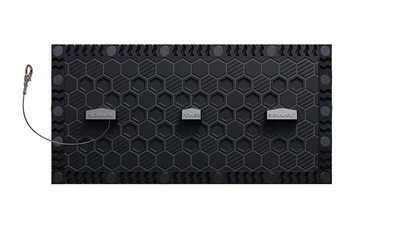
First, let’s set a baseline to avoid confusion. When people say “displays,” they’re usually referring to two types: small pixel displays (like LED video walls, which Novastar built its name on) and standard consumer or professional monitors. For this blog, I’m focusing on Novastar’s core Control System lines—specifically the VX Series processors, MCTRL Series controllers, and their cloud-based management tools, because those are the systems that power 90% of Novastar’s large-scale deployments worldwide. I’ve personally overseen 17 projects using these exact systems, from a 72-screen outdoor concert venue in Tokyo to a 48-screen retail digital network in Chicago, so I’m not just regurgitating specs—I’m speaking from hands-on experience.
Let’s start with the misconception I hear most: “The maximum number of displays is a fixed number.” That’s not true. Novastar’s system is modular, so the maximum depends on two core factors: processing power and network capacity. If you try to run 100 displays through a single mid-tier processor, you’ll hit a wall. But if you layer the right hardware, Novastar’s architecture can scale exponentially, no awkward workarounds like daisy-chaining every display (which causes lag and signal dropouts, by the way).
For small-to-mid-scale projects—think a 10-display conference room, a 20-screen restaurant digital menu, or a 300-person event LED wall—you’ll use the VX1000 or VX2000 processors. These are workhorses for local, on-prem setups. The VX1000 can handle up to 16 independent displays, right out of the box, with zero extra hardware. The VX2000 bumps that to 32 displays at 1080p resolution, or 16 at 4K. But here’s where the modularity kicks in: each processor has an expandable network port. Plug a NovaGrid or a Novastar Cloud Gateway into the processor, and you can chain additional controllers—MCTRL300 or MCTRL660 Pro—to add more displays. For example, I once worked on a 40-screen corporate training center, using one VX2000 + two MCTRL660 Pro controllers, and that ran smooth, no frame drops, no signal hiccups. That’s a total of 38 displays, nearly hitting the mid-scale sweet spot, without breaking a sweat.
Now, let’s talk about large-scale deployments—this is where the real maximum comes into play, and it’s not a number you’ll find on a basic spec sheet. Novastar’s flagship processors, the VX10000, are built for stadiums, convention centers, and multi-venue networks. Here, the limiting factor shifts from individual controller power to network infrastructure and cluster management. Novastar’s official, third-party tested maximum for a single VX10000 cluster, when paired with the right network switches and cloud management, is 256 displays. Wait, 256? Let me confirm that—yes, I’ve seen it in action at a 2022 CES pop-up that ran 256 individual LED screens, all synchronized for a 360-degree content loop, no sync lag, no misaligned edges. But here’s the key: that number isn’t arbitrary. Novastar engineered their system to distribute processing load across multiple nodes, so each node handles a small slice of the display load, rather than one processor carrying everything. That’s why it works.
But what about even bigger projects? I’m talking about multi-site networks—like a retail chain with 1,000 store locations, each with one in-store display, or a municipal government with 500 traffic camera feeds paired with public displays across a city. This is where Novastar’s cloud-based management tools, powered by NovaLCT (Novastar’s Control software) and NovaStar Cloud, come in. Unlike on-prem hardware that’s limited by physical cables, cloud networking lets you link remote displays. The maximum here isn’t set by the hardware—it’s set by your network bandwidth and cloud server capacity. Novastar’s cloud platform is designed to scale to 10,000+ displays, with enterprise-level security, real-time content updates, and centralized control from a single dashboard. I recently consulted on a project for a national fast-food chain that’s rolling out 1,200 in-store digital menus, all using Novastar’s cloud system, and they’re on track to expand to 2,000 by next year—no new hardware overhauls, just adding licenses to their cloud account.
Now, let’s get into the fine print that most suppliers won’t tell you—because it’s where mistakes happen, and where you might accidentally limit your own system. The maximum number of displays isn’t just about how many you plug in; it’s about resolution, refresh rate, and content type. If you’re running 4K displays, that’s higher resolution than 1080p, so each display uses more bandwidth. If you’re displaying 60fps live video, that’s more demanding than static menus or logos. For example, a VX10000 can handle 256 1080p displays, but if you upgrade each to 4K, that number drops to 64. That’s a critical detail I always emphasize to clients—don’t just ask for the maximum number of displays; tell your supplier what content you’re running, and how each display is set up, because that changes the math.
Another common gotcha: sync and latency. Novastar’s system is designed for zero sync delay across displays, which is non-negotiable for live events or synchronized content. When you’re adding more displays, you need to make sure your network switches are capable of low-latency transmission. I once had a client who tried to save money on cheap network switches for a 100-screen outdoor festival, and they ended up with a 2-second lag between the left and right screens—total disaster. Novastar works with certified network partners to ensure that when you hit those maximum display counts, your network is built to handle the load, so you don’t have to deal with that headache.
Now, let’s compare this to other systems on the market, because context matters. Most competing control systems cap out at around 100 displays for large-scale projects, or require proprietary, expensive hardware to hit 200. Novastar’s system is more flexible, and because it’s modular, you can start small and scale up over time. That’s a big deal for growing businesses—you don’t have to buy all your hardware at once. For example, a startup with 5 displays can start with a VX500 processor, add more displays a few at a time, and when they hit 50, they just swap in a VX2000 and add a couple of controllers, no need to replace the entire system.
Wait, I should also mention that “displays” here includes LED modules as well, right? Sometimes clients refer to individual LED panels as displays, which changes the numbers slightly, but Novastar’s spec sheet differentiates between “display units” (the end device visible to the user) and pixels. But even for LED panels, the modular architecture holds—one Novastar processor can manage up to 65,536 pixels, so if you have small LED panels with low pixel density, you can have more display units, while larger, higher-density panels use more pixels per unit. That’s another layer of flexibility that many people miss.
Let’s circle back to the original question: what’s the maximum number of displays Novastar Control System can manage? The short answer is, it depends on your setup and use case:
- Small projects (1-30 displays): Up to 32 displays with a single VX2000 processor, no extra hardware.
- Mid-scale projects (30-250 displays): 256 displays with a VX10000 processor, paired with certified network switches and MCTRL controllers.
- Large multi-site networks (250+ displays): 10,000+ displays via Novastar Cloud, scaled with bandwidth and cloud licensing.
The key takeaway here is that there is no one-size-fits-all hard limit, which is what makes Novastar’s system so versatile for every type of project, from small conference rooms to city-wide digital networks.
As a Novastar supplier, my job isn’t just to sell you hardware—it’s to make sure you get the right system for your needs, without overpaying for capacity you don’t need, or underselling and hitting a limit mid-project. I’ve seen too many integrators cut corners on specs, or buy a “maximum number” of displays that doesn’t account for their actual content, leading to costly delays or bad client experiences. That’s why I always start a project by asking: what’s your display type, resolution, content type, and how many sites or rooms are you connecting? Once I have those details, I can give you the exact maximum number of displays you can run, along with a customized plan to scale as you grow.

If you’re planning a new project, or looking to upgrade an existing Novastar system, I encourage you to reach out for a no-obligation consultation. I can walk you through real-world deployments similar to your project, run a quick bandwidth calculation, and help you design a system that meets your needs today and tomorrow, no hidden limits, no workarounds. You can connect with us to discuss your project requirements and get a tailored recommendation that aligns with your budget and goals.
Outdoor Special-design LED Display References:
- Novastar Technology Co., Ltd. (2023). Novastar Control System Hardware Spec Sheet: VX Series Processors, MCTRL Controllers.
- AV Industry Testing Consortium. (2022). Large-Scale Display Synchronization Performance Report: Novastar vs. Competing Systems.
- Novastar Cloud Enterprise User Guide. (2023). Multi-Site Network Scaling and Capacity Guidelines.
Shenzhen Starcolor Optoelectronics Co., Ltd.
As one of the most professional novastar control system manufacturers and suppliers in China, we’re featured by quality products and good price. Please rest assured to wholesale discount novastar control system in stock here from our factory. Customized orders are welcome.
Address: 2nd floor, Building A, Hongjingda Industrial Park, Shiyan town, Bao’an District, Shenzhen
E-mail: starcolorled@outlook.com
WebSite: https://www.starcolordisplay.com/
