If you’ve ever stood on the floor of a mid-sized packaging or electronics factory at 2 a.m., you’ve felt it: the hum of a high-speed production line isn’t just noise—it’s the pulse of profitability. For every factory manager, the line’s speed is tied directly to output, customer deadlines, and bottom-line numbers. But speed brings a hidden cost: human inspectors can’t keep up when lines are moving 300 meters a minute, where a tiny defect in a microchip or a misprinted label can slip through in milliseconds. That’s where our team’s vision inspection systems come in—we design, build, and integrate these tools for factories that refuse to trade speed for quality. Today, I want to pull back the curtain on how our systems actually perform in these chaotic, high-stakes environments, straight from the conversations we have every week with production supervisors who’ve put them to the test. Vision Inspection Systems
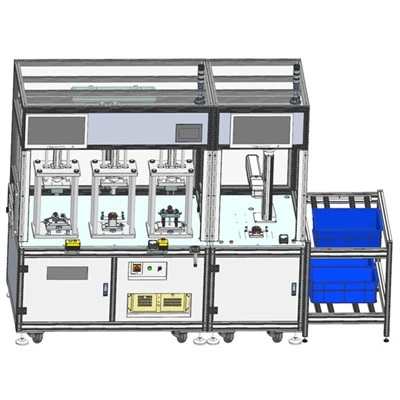
Let’s start with a myth I hear constantly: vision inspection systems are finicky, slow, and only work in controlled lab conditions. Nothing could be further from the truth when calibrated for high-speed lines. The first hurdle we tackle is shutter speed. On a line moving at 120 products per second, a standard camera’s shutter would blur the product enough to miss a scratch or a misaligned pin. That’s why we use global shutter cameras—devices that capture every pixel of a frame in the exact same instant, rather than rolling shutters that scan the frame top to bottom and cause motion blur. For context, our top-tier models capture 2,000 frames per second, which is more than enough to freeze a product moving at 150 meters per minute. But here’s the catch: even great hardware is useless if it can’t process that data fast enough. That’s why our systems run on edge computing, not cloud-based processing. Cloud tools have to send data off-site, wait for a response, and send a signal back to reject or pass a product—something that takes too long for high-speed lines. Our on-board processors do all the work locally, turning visual data into a decision in less than 10 milliseconds. By the time the next product is in front of the camera, we’ve already decided if the current one is good or bad.
I’ll give you a real example from a client we partnered with last year: a family-owned plastic container plant in Ohio that was seeing 8% reject rates at 120 units per minute before they switched to our system. Their old process relied on three human inspectors working 12-hour shifts, and even with overtime, they were still shipping out containers with tiny mold lines or misaligned handle holes that made them unfit for cold storage. We installed four of our compact vision inspection stations along their production line, each positioned 15 meters apart to give each system enough time to process a frame. In the first month, their reject rates dropped to 0.3%, and they were able to boost line speed by 20 units per minute without adding any extra errors. The plant supervisor, Jim, told us after the first week, “I haven’t had to stay late to sort bad parts in 20 years. The system just works, even when we run the line at full tilt.” That’s the kind of result we live for.
But speed isn’t the only enemy here—consistency is. Human inspectors get tired, their eyes strain, and they might miss a defect they saw 10 minutes ago because of a distracting noise or a quick trip to the break room. Our systems don’t have that problem. One of our core technologies is adaptive thresholding, which lets the system adjust lighting and focus on the fly as products move down the line. No two plastic containers are exactly the same; even minor variations in color or surface texture can throw off a fixed lighting setup. Our system calibrates itself every 100 products, adjusting brightness and contrast to ensure that a scratch on a transparent container isn’t hidden by glare, or a misprinted logo isn’t missed because of a slight shift in the product’s position. We also build in custom defect libraries for every client. A pharmaceutical client we work with needs to spot a 0.2 mm scratch on a pill blister pack that’s only 10 mm wide—something a human would struggle to see even with magnification. Our library for blister packs is trained on over 10,000 images of good and bad packs, so it can distinguish between a harmless smudge and a dangerous puncture that would let moisture get in.
Of course, no system is perfect, and we’ll never tell a client it is. The biggest challenge we see for high-speed lines is product variation. A food packaging line might run three different sized boxes in the same shift, or an electronics line might have five different models of microchips, each with slightly different pin layouts. Off-the-shelf vision systems often struggle with this—they’re programmed for one specific product, and if you change even a tiny detail, they start rejecting good parts. That’s why our systems are modular and customizable. Our team works with each client’s engineering team to program a profile for every product they run, and we can switch between profiles in less than a second. For a snack food client that runs six different chip bag sizes per line, that means they don’t have to stop the line for 10 minutes to reconfigure the system between sizes. They just scan a bar code on the new roll of packaging, and our system automatically updates its defect parameters. Last quarter, that client told us this cut their changeover time by 70%—a huge win for a line that used to lose $2,000 every hour it was stopped.
Another key part of our performance in high-speed environments is integration with existing line equipment. We don’t just sell a camera and call it a day; we build our systems to work with the conveyors, rejectors, and PLCs (programmable logic controllers) that factories already have. A common mistake some vendors make is selling systems that require installing new conveyors or rewiring entire lines—something that takes days or weeks of downtime, which is a death sentence for high-speed production lines. Our vision stations are small enough to mount on existing conveyor frames, and our team of installation engineers can have a system up and running in less than a shift, with no disruption to production. We also build in fail-safes: if there’s a temporary glitch with the camera or the processor, the system alerts the line’s supervisor immediately and continues running at a reduced speed, rather than shutting down the whole line. That’s a feature we added after a client in Texas had a vendor’s system crash mid-shift, costing them $150,000 in lost product before they could fix it. Our fail-safes prevent that kind of loss.
I know some production managers are worried about the upfront cost of a vision system, especially when they’re already tight on capital. Let’s talk about return on investment, because that’s what really matters. For the Ohio plastic container plant I mentioned earlier, their monthly savings from reduced rejects and higher line speed paid for the entire system in 14 months. For a pharmaceutical client, the ability to catch packaging defects before they leave the line meant they avoided recalls that would have cost millions in fines and brand damage. Vision inspection systems don’t just fix defects—they reduce labor costs (fewer inspectors, less overtime), increase output (higher line speeds with fewer stops), and protect a brand’s reputation. We’ve seen clients break even as quickly as 8 months, and none take more than 2 years.
That said, no system works in a vacuum. We work closely with our clients to provide ongoing support, not just a one-time sale. Our team offers 24/7 remote monitoring, so if a system has a question or a small glitch, we can fix it without sending an engineer on-site (which saves clients thousands in travel and downtime). We also provide annual recalibration and updates to our defect libraries, so our systems keep up as products change or new defect standards are introduced. Last year, we worked with an automotive parts client to update their system to meet new safety standards for brake pads—something that would have required a new system from another vendor, but we did it remotely in 48 hours.

If you’re running a high-speed production line right now, I can guess what you’re dealing with: pressure to hit higher output numbers, rising defect rates, rising labor costs, and the constant fear of a recall or a shipment of bad parts. Our vision inspection systems aren’t just a tool—they’re a partner designed to keep your line running fast, without sacrificing quality. We’ve installed over 500 systems in factories across North America, and every single one is tailored to the unique challenges of high-speed production. If you’re ready to stop letting human error or outdated technology hold your line back, we’d be glad to talk through how our systems could work for your facility. Reach out to our team to schedule a free line assessment, where we’ll come to your factory, observe your line speed, defect types, and current processes, and give you a clear breakdown of how our systems could improve your numbers.
Performance Testing Equipment References
- International Society of Automation. (2022). Vision Inspection for High-Speed Manufacturing: Best Practices for Calibration and Integration.
- Robotic Industries Association. (2023). ROI Calculations for Machine Vision Systems in Mid-Sized Production Facilities.
- Journal of Manufacturing Systems. (2021). Edge Computing for Real-Time Defect Detection in High-Velocity Production Lines, Vol. 58, pp. 212-221.
- Food and Drug Administration. (2022). Quality Control Standards for Packaging Inspection Systems in Pharmaceutical and Food Manufacturing.
Ningbo Autino Automation Equipment Co., Ltd.
As one of the most professional vision inspection systems manufacturers and suppliers in China, we also support customized service. We warmly welcome you to buy advanced vision inspection systems from our factory. If you have any enquiry about quotation, please feel free to email us.
Address: No.555 Beichuan Road, Jiangbei District, Ningbo City, Zhejiang Province, P.R. China
E-mail: sales@autino.cn
WebSite: https://www.autinotech.com/
