Hey everyone, if you’re deep in the throes of prepping a racing boat for your next regatta (or just trying to keep up with the pack), you know gear isn’t just “nice to have”—it’s make-or-break. And when it comes to communication? A marine radio isn’t just a gadget. It’s your lifeline to the coast guard, race officials, your crew, and even other racers when things get chaotic out on the water. As someone who’s been in the marine radio game for years (not some random AI spitting specs—trust me, I’ve shipped radios to more racing teams than I can count), I’m here to walk you through exactly how to pick the right one for your racing boat. No boring jargon, no fluff, just real talk that actually works when you’re tussling for the line. Marine Radio
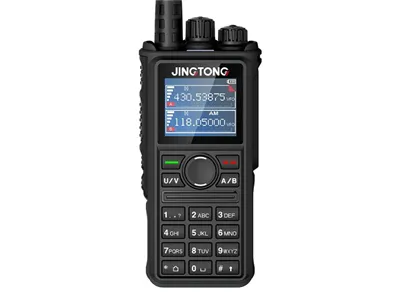
First off, let’s cut to the chase: not all marine radios are created equal. A recreational fishing boat’s radio is nothing like what you need for a racing boat. When you’re racing, every second counts, the water’s choppy, and there’s a million other boats all talking over each other. You don’t want a radio that’ll cut out mid-race or get confused by too many signals. Let’s break down the key stuff you need to look at, starting with power. Wait—don’t just say “more power is better” like every sales guy on the docks. Yeah, power matters, but it’s not the only thing. Racing boats? Most of the time, you’re not going 50 miles offshore on a random training run—you’re in coastal waters, in regatta zones where distances to shore are usually under 20 miles. So a 25-watt radio (the max for VHF marine) is totally enough for 99% of racing scenarios. I’ve seen teams drop $1k on a 50-watt radio and it’s overkill—they never use the extra power, and it’s bulkier, which is a big deal on a racing boat where every pound counts. But wait, there’s a caveat: if you’re doing long-distance offshore races (like the Newport to Bermuda or something), yeah, go for the full 25 watts. But for inshore and coastal regattas? Stick with the 25-watt model. Save the weight and cash for other racing gear.
Next up, is it fixed-mount or handheld? This is the biggest debate I get from racing skippers. Let’s be real: a handheld radio (often called an HT) is super portable, you can clip it to your life jacket, pass it to a crew member on the bow, or stow it in a pocket. But here’s the thing for racing: fixed-mount radios are way more reliable in a crash or a big wipeout. When your boat heels hard, or you get knocked around, a fixed unit is bolted down, no chance it goes flying overboard. And fixed mounts usually have way better antennas, which is non-negotiable for signal strength. But wait—what if your racing boat is small, like a skiff or a dinghy where there’s literally nowhere to mount a fixed radio? Then a good HT is your move. But make sure it’s a marine-specific HT, not a random walkie-talkie you bought at a department store. Those don’t have the right frequencies or water resistance. I’ve seen teams use cheap HTs during a race, and half-way through, salt water gets in, and they’re stuck without communication. Not cool. So my rule: if your boat is over 20 feet, go fixed-mount. If it’s smaller, get a top-tier marine HT, not a cheap toy.
Now, features—this is where you can’t just check a box. For racing, some features are non-negotiable, others are just nice-to-have, and some are straight up useless. Let’s start with non-negotiables first. First, DSC (Digital Selective Calling). DSC isn’t just a fancy feature—it’s life-saving, especially for racing. With DSC, you can send a distress signal with the push of one button, and it automatically transmits your exact GPS coordinates to the coast guard and race officials. No more fumbling to say “I’m about 10 miles east of the race buoy” when you’re bobbing in rough water. Also, DSC lets you call another specific boat or channel directly, not just yell over the whole frequency. That’s huge when 20 other racing boats are all on channel 16 (the emergency and calling channel). Wait—speaking of channels, make sure your radio supports the racing-specific channels. Most regattas use channel 72 for race communications, right? And channel 16 for hailing and distress. So the radio needs to have those pre-programmed, no extra setup needed. Some cheaper radios make you program channels manually, which is a pain when you’re rushed before a race.
Another non-negotiable: water resistance. Don’t even look at a radio that’s less than IPX7 rated. IPX7 means it can be submerged in up to 1 meter of water for 30 minutes—perfect for when a wave crashes over your boat, or you’re spraying water everywhere. I’ve had customers send back radios that were rated lower, because a big splash during a practice run fried the circuit. Don’t be that guy. Also, make sure the display is readable in bright sunlight. Nothing’s worse than squinting at a tiny screen when you’re trying to hear a race official’s call as the sun is blinding you. Backlit displays are good, but daylight-readable ones are a must for racing.
Now, the nice-to-have features, the ones that’ll make your life easier but aren’t dealbreakers. First, a built-in GPS. A lot of modern marine radios have this, and it pairs perfectly with DSC. Like I said earlier, the DSC distress call uses GPS, but if you’re not triggering a distress, you can use the built-in GPS to share your boat’s location with the race team or other boats. That’s super helpful for race officials tracking positions, or if you need to stay in touch with your coach on land. Another nice one: AIS (Automatic Identification System). AIS lets you see other boats (both racing and commercial ships) on your radio’s display. When you’re in a packed regatta course, avoiding a big cargo ship or another racer that you can’t see around a buoy is way easier with AIS. Some radios have built-in AIS, others have an external receiver. If your budget allows, go built-in—it saves space, which is key on a racing boat. Also, Bluetooth connectivity? That’s cool. You can pair your radio with your phone, so you can take calls hands-free, or even stream audio (though you probably won’t be streaming Spotify during a race, but it’s nice for prep before you hit the water).
Now, the stuff you can skip. Any radio that has a bunch of entertainment features—like built-in speakers for music, or Bluetooth to stream tunes. Who cares? You don’t need music when you’re racing, that’s just extra bulk and cost. Also, any radio that’s over 10 pounds. Racing boats are all about weight savings. A fixed-mount radio should be no more than 5 pounds, tops. If it’s heavier, find a smaller, lighter model. I’ve had skips turn down a higher-end radio because it added 2 pounds to their boat—2 pounds that could go to a better sail or lighter rigging. So weight is a real factor, don’t sleep on it.
Wait, let’s talk about antenna setup too. I can’t tell you how many teams pick a great radio then mess up the antenna, and wonder why their signal is garbage. For racing boats, you need a short, high-gain antenna. Not a long, whippy antenna that’s great for cruising but will catch wind and slow you down. A low-profile, high-gain antenna is the sweet spot. It’s short, so it doesn’t create drag, but it amplifies the signal perfectly for coastal racing. And make sure it’s mounted as high as possible on your boat—even a foot higher can make a huge difference in signal range and clarity. I always recommend pairing our racing-specific antennas with our fixed-mount radios, because we’ve tested that combo for regattas and offshore races alike.
Now, budget. Let’s be real, racing isn’t cheap, so you don’t want to blow your whole gear budget on a radio. But also, don’t skimp to the point where you have to replace it after one season. For a fixed-mount racing radio, you’re looking at $300 to $800. The $300 models are good if you’re a casual racer doing local regattas. They have DSC, IPX7, basic GPS, and are lightweight. The $800 models are for serious teams doing offshore or pro regattas—they have AIS, better displays, and more durable parts. For handhelds, $150 to $300 is the range. The $150 HTs are fine for small dinghies that only do inshore races, but if you’re using a handheld as a backup for a fixed radio, go for the $250+ ones, which have better battery life and are more durable. I see too many guys buy the cheapest HT they can find, then it dies mid-race when they need it most. Battery life is another thing—look for a radio that has at least 12 hours of standby time, because you don’t want it dying during a long practice session or regatta.
Wait, let’s throw in a real-world example to make this concrete. Last year, I worked with a team that was prepping for the Key West Race Week. They initially bought a $250 fixed-mount radio from a big box store, thinking it was enough. But when they tested it, the display was impossible to read in the Florida sun, and the signal cut out when they were near the inlet. They swapped it for our racing-specific fixed radio—lightweight, IPX7, DSC, sunlight display, and paired with our low-profile antenna. They ended up winning their class, and their skipper told me the communication with race officials and other boats was way smoother than their competitors. That’s the difference between picking a radio for racing vs. just any old marine radio.
Also, don’t forget testing. Before the big race, take your radio out on the water, test the channels, test the DSC, make sure the antenna is working. I always tell customers to do a quick test run a week before regatta day, not the morning of when you’re stressed and rushed. Nothing is worse than realizing your radio isn’t working right 30 minutes before the starting gun.
Now, let’s wrap this up with what you need to remember, quick and dirty:
- Power: 25 watts max for racing, skip the extra watts.
- Mount: Fixed-mount for boats over 20ft, top-tier marine HT for smaller boats.
- Non-negotiable features: DSC, IPX7 water resistance, sunlight display, support for race channels (72, 16).
- Nice-to-have: Built-in GPS, AIS, lightweight design.
- Skip: Entertainment features, overkill power, heavy units.
- Antenna: Low-profile, high-gain, mounted as high as possible.
If you’re still not sure which radio fits your boat and racing style, I’m here to help. We’ve supplied radios to hundreds of racing teams, from local club regattas to offshore pro circuits. We can walk you through the options, answer any questions, and make sure you get a radio that’s reliable, lightweight, and perfect for your racing needs. Just reach out to us to chat through your setup.

References:
- National Oceanic and Atmospheric Administration (NOAA) Marine VHF Radio Guidelines
- US Sailing Racing Communication Best Practices, 2023 Edition
- International Telecommunication Union (ITU) Marine Radio Regulations, Volume II
3 Watt Walkie Talkie That’s it—no fancy stuff, just real advice from someone who knows the racing game. Now go get your gear ready, and I’ll see you on the water.
Jingtong (Quanzhou) Electronics Co., Ltd.
We are one of the most professional marine radio manufacturers and suppliers in China, specialized in providing high quality customized service. We warmly welcome you to buy durable marine radio made in China here from our factory. For price consultation, contact us.
Address: No.288, Si Huang Industry Zone, Xia Mei Town, Nan An, Quanzhou, Fujian province, China 362302
E-mail: jtdjj@jtdjj.com
WebSite: https://www.jteradio.com/
