What’s really going on when you hold a coiled spring pin? I’m one of the guys who makes and supplies these little workhorses, so let me walk you through the process without all the boring jargon. If you’ve ever wondered how a strip of steel turns into that springy, strong pin that holds everything from car engines to office chair hinges in place—stick around. This isn’t some secret factory trick; it’s just the step-by-step work we do every day to get the right product to you. Coiled Spring Pins
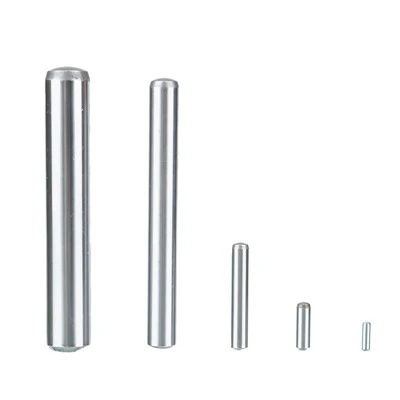
First off, I need to set the stage: coiled spring pins aren’t your basic solid dowel pins. They’re hollow, spiral-wound, and that spring design is what makes them so versatile. You don’t need to drill a perfect hole, and they expand slightly once pressed in to lock tight. But before they get coiled, the steel has to be just right. We start with cold-drawn low-carbon steel wire—nothing fancy, but precise. The wire isn’t thick or thin by accident; we cut it to a specific diameter depending on what the pin’s going to be used for. If it’s for a small electronics component, the wire might be super thin. If it’s for heavy machinery, we go thicker. We check every spool of wire with a quick caliper test to make sure there’s no variation—one off spot could ruin the whole pin later.
Next, the wire gets unspooled and straightened. I know, sounds simple, but even a tiny bend in the wire means it won’t coil evenly. We feed it through a straightening machine that pulls it past a series of hardened rollers—old machines, but they work. Our guys have been tweaking the roller tension for years, so the wire comes out dead straight, no kinks, no waves. If the wire’s not straight here, the coil will be lopsided, and that’s a guaranteed failure when you install the pin. We do a quick visual check here too—any nicks or scratches on the wire surface? Yep, scrap it. No need to waste time on material that’s already damaged.
Once the straight wire is ready, it’s time to form the spiral coil. This is where it gets fun (for us, at least). We use a coiling machine—these aren’t the ones you’d have at home; they’re heavy-duty, with a rotating mandrel. The mandrel is a hardened steel rod sized to make the exact inner diameter of the pin we’re producing. We feed the straight wire into the mandrel at a set speed, and the machine twists it into a continuous spiral strip. The spacing between the coils is critical—too wide, and the pin won’t compress enough; too tight, and it won’t expand to lock in place. We use a small gauge tool to check the gap between every few inches of coil as it comes out. Once the spiral strip is long enough, we cut it to length.
Wait, but this spiral strip isn’t a pin yet. It’s a long, hollow spiral tube. So now we have to slit that spiral tube longitudinally—cut it along the length, not across. This is where the spring action comes from. We feed the continuous spiral tube through a slitting machine with a sharp, precision blade. The blade cuts it into a single strip, but wait—since it’s a spiral, cutting along the length gives us that coiled, springy profile. Let me make that clear: if you take a slinky and cut it along the side, you get a flat strip that, when you let go, wants to spring back into a spiral shape. That’s exactly what we’re doing here. The slit width is super important too—if the slit is too wide, the pin won’t hold its shape; too narrow, and the spring tension is too high, making it hard to install. Our guys adjust the blade position on the fly—no two jobs are exactly the same, so you have to pay attention.
Now, that slit strip is still long and flexible. We need to cut it into individual pins. So next step: cutting the spiral strip to length. We use a rotary cutting machine here—this thing spins the strip past a sharp blade, cutting off pin after pin. The length of each pin depends on what you’re using it for. A pin for a plastic toy might be 10mm long, while one for a heavy truck could be 50mm. We adjust the machine’s cut frequency to get exactly the length we need. After cutting, each pin is a short, springy spiral. But wait—they’re all a little rough around the edges, right? The cut ends might have burrs, and the surfaces could be a little dirty from the machine. That’s where deburring and cleaning come in.
Deburring is simple—we put the loose pins into a tumbler with small ceramic media and a little soap. The tumbler spins for 15-20 minutes, and the media rubs off all those sharp burrs. No one wants a pin that cuts their hands when handling, and burrs can also scratch the surface of the part you’re installing it in. After deburring, we rinse them off to get rid of the soap and any loose debris, then dry them in a big hot air dryer. Now they’re clean and smooth, but they’re not finished yet.
Wait, some applications need extra protection—like if the pin is going to be outside, or in a corrosive environment. So we offer plating options, but only when needed. The plating process: we hang the pins on racks, then dip them in a cleaning solution to remove any remaining oil or grime, then electroplate them with zinc, nickel, or sometimes a more corrosion-resistant coating like达克罗(no, wait, no Chinese—zinc is standard, some go for black oxide for a matte finish). We don’t plate every pin; we talk to each customer to figure out what their needs are. If it’s just a simple bracket, plain steel works. If it’s a marine part, we recommend the zinc plating to prevent rust. That’s one of the perks of working directly with us—we don’t do a one-size-fits-all.
Then, after plating (if we do it), we do a quality check. This is the part that’s not super exciting, but it’s what keeps our customers coming back. We pick random samples from every batch and test them. First, we check the dimensions: diameter, length, slit width. If any pin is even a hair off, the whole batch goes back. Then we do a spring test—we compress the pin to a certain amount, measure how much force it takes, and make sure it rebounds to its original shape. If it doesn’t rebound, that’s a dud. We also test install them into a sample hole to make sure it locks tight, no slipping. We don’t send out bad pins—period.
I should mention, there are different types of coiled spring pins, right? Some are slotted, some are non-slotted, but the core process is basically the same. The slotted ones have an extra slot cut along the length to give more flexibility, which is good for parts that vibrate a lot. But even that slot is added after the main coiling process. It’s a small extra step, but it makes a big difference in performance.
Now, let’s get real for a second. This isn’t a fully automated process—we have guys on the floor who’ve been doing this for 20+ years. They know when the coiling machine is off by the sound it makes, when the deburr tumbler needs a little more media, when a batch of wire is acting up. You can’t automate that kind of eye and ear. That’s why our pins are consistent—because we don’t just run machines, we pay attention.
If you’re reading this, chances are you’re looking for coiled spring pins, maybe you’ve used them before but didn’t think about how they’re made. Whether you need a small batch for a prototype or a huge run for mass production, we’ve got you covered. We work with all kinds of industries—automotive, electronics, furniture, agricultural equipment. No order is too big or too small. The process we use is designed to be flexible, so we can adjust quickly to your specific needs.
If you’re tired of working with suppliers that cut corners on material or quality, hit us up. We don’t promise miracles, but we promise reliable, well-made coiled spring pins that work when you need them. Just reach out to our team, tell us what you’re working on, and we’ll help you pick the right pin for the job. No confusing jargon, no hidden fees—just honest supply of a product that we’ve been doing right for years.
Oh, and one more thing—we’re always tweaking the process to be more efficient and less wasteful. The coiled spring pin industry has come a long way from the old days, and we’re not stuck in the past. We use better steel, better machines, and better quality checks, all to make sure you get a product that’s worth your money.

At the end of the day, a coiled spring pin is a small part, but it does big things. It holds parts together, reduces wear, makes assembly easier. The process of making it is straightforward, but it takes care to get it right. That’s why when you order from us, you can trust that each pin was made with attention to detail. If you’re ready to talk about your project, or just have questions, don’t hesitate to get in touch. We’re here to help.
Washers References
- Machinery’s Handbook, Industrial Press Inc.
- Coiled Spring Pin Manufacturing Standards, Spring Manufacturers Institute
- Modern Metal Forming Processes, Society of Manufacturing Engineers
- Automotive Fastening Systems Handbook, SAE International
Anhui Pins Metal Products Co., Ltd.
With abundant experience, we are one of the most professional coiled spring pins manufacturers and suppliers in China. Please rest assured to buy high quality coiled spring pins made in China here from our factory. For custom service and OEM&ODM service, contact us now.
Address: No. 381 Yangqiao Road, Quanjiao County, Chuzhou City, Anhui Province. Postal Code:239500
E-mail: info@chn-pins.com
WebSite: https://www.chn-pins.com/
