If you’re working with ethylene oxide (EtO) gas—whether you’re a healthcare worker reprocessing medical devices, a pharmaceutical formulator, or a facility manager handling industrial sterilization batches—you already know this: EtO is an incredibly effective sterilant, but it’s also a hazardous material. As someone who’s spent the last 12 years supplying EtO gas to facilities across North America, I’ve seen firsthand how even small gaps in personal protective equipment (PPE) can lead to preventable exposure, respiratory irritation, or long-term health risks. This isn’t just a “follow the rulebook” topic; it’s about protecting the people who rely on EtO’s power while respecting its dangers. Let’s break down exactly what PPE you need, why each piece matters, and how to use it correctly, straight from a supplier who’s walked job sites with your teams. EtO Gas

First, let’s ground this in why EtO demands such specific protection. At room temperature, EtO is a colorless, flammable gas with a sweet, ether-like odor—but here’s the catch: odor thresholds vary wildly, and some people can only detect it at concentrations as high as 500 parts per million (ppm), while the Occupational Safety and Health Administration (OSHA) sets a permissible exposure limit (PEL) of just 1 ppm over an 8-hour workday. Short-term exposure to levels above 100 ppm can cause nausea, dizziness, and even central nervous system damage, while chronic exposure is linked to increased cancer risk and reproductive harm. That means your PPE can’t be generic—it has to block both inhaled vapor and skin contact, two of the most common exposure routes for workers.
Let’s start with the most critical layer: respiratory protection. This is non-negotiable for any worker entering areas where EtO is present, even if you think the room “smells fine.” For most routine tasks—like loading EtO cylinders, monitoring sterilizer cycles, or transferring gas to a generator—N95 respirators won’t cut it. N95s are designed for particulates, not chemical vapors. Instead, you need air-purifying respirators (APRs) with organic vapor (OV) cartridges, and not just any OV cartridges: they must be labeled for “methyl ether” or “ethylene oxide” specifically, because standard OV cartridges won’t adsorb EtO effectively. For high-exposure scenarios, like repairing a faulty sterilizer line or working in a space where a leak has been confirmed, you’ll need a supplied-air respirator (SAR) with a full facepiece, rather than an APR. SARs pull clean air from an external source, eliminating the risk of cartridge saturation, which can happen unexpectedly if a leak is larger than anticipated. I always advise our customers to have a fit test done annually for every respirator wearer; a respirator that fits one person’s face won’t work for another, even if it’s the right model, and a poor fit leaves gaps that EtO can slip through.
Next, skin protection. EtO can be absorbed through the skin, especially through broken skin or mucous membranes, so regular work clothes don’t count. For most handling tasks, you need a full-body chemical-resistant suit, not a disposable Tyvek coverall. Tyvek is water-resistant but not impermeable to EtO, which is a small molecule that can seep through the material over time. The best suits are made from laminated materials like butyl rubber or Viton, which are rated for EtO permeation; look for a permeation rate of less than 0.1 micrograms per square centimeter per minute, per ASTM standards. These suits should have sealed, elastic cuffs and ankles, and a hood to cover the neck—no exposed skin at all. For hand protection, nitrile gloves are a common go-to, but again, standard nitrile won’t block EtO. You need butyl rubber or neoprene gloves, at least 14 mils thick, and they should extend past the wrist to seal inside the suit’s cuffs. I’ve seen workers cut corners here, using thin nitrile gloves because they’re more comfortable, and within an hour, the gloves had developed tiny pinholes from contact with EtO residue on a cylinder valve. For eye protection, a face shield is essential even if you’re wearing goggles: EtO can splash or vapor can condense into liquid on the face, and a face shield paired with goggles creates a barrier that covers not just the eyes, but the entire face, preventing vapor from reaching the eyes or nasal passages.
Don’t forget administrative controls that pair with your PPE—they’re not optional, and they’re part of the safety protocols we outline for every customer who buys EtO from us. Even with the best PPE, if you’re working in an unventilated area, exposure will build up. So before you even put on your PPE, confirm that the work area has a continuous ventilation system that maintains EtO levels below 1 ppm. We also require our customers to have gas detectors on site, calibrated weekly, that alarm if EtO levels exceed 0.5 ppm—half the OSHA limit—giving workers time to evacuate before exposure becomes dangerous. And if you have a potential exposure incident (like a leak, or a PPE tear), you must decontaminate immediately: remove your suit and gloves, wash your skin with mild soap and water for at least 15 minutes, and get medical attention, even if you feel fine. EtO exposure symptoms can be delayed, so a doctor who knows you worked with EtO can monitor you for issues down the line.
Now, let’s talk about how our team at [our company] supports you with this. As a dedicated EtO supplier, we don’t just drop off cylinders and leave; we provide all the PPE guidance our customers need, tailored to their specific setup. For example, a small outpatient clinic that reprocesses 10 endoscopes a week has different needs than a large pharmaceutical plant that runs 24/7 sterilization cycles. We’ll work with your safety team to audit your current PPE, replace any inadequate gear, and train your workers on proper use. We also keep a stock of EtO-specific PPE in our warehouse, so you don’t have to wait days for specialized cartridges or suits when you need them.
If you’re not already partnering with a supplier who prioritizes safety, that’s a gap you can’t afford. I’ve seen facilities cut costs on PPE to save money, only to face OSHA fines, worker illnesses, or even accidental releases that shut down operations for weeks. Our job as EtO suppliers isn’t just to deliver a product—it’s to make sure that product is handled safely, because when our customers succeed in protecting their workers, we succeed too.
For more detailed guidelines, you can reference OSHA’s ethylene oxide standard (29 CFR 1910.1048) or the National Institute for Occupational Safety and Health (NIOSH) EtO safety bulletins. But don’t stop there—reach out to our team to discuss your facility’s specific needs, whether you’re looking to update your PPE stock, train your staff, or ask questions about safe handling protocols. We’re here to help, no matter how big or small your operation is.
References:
Occupational Safety and Health Administration. (n.d.). Ethylene Oxide. U.S. Department of Labor.
National Institute for Occupational Safety and Health. (2020). Ethylene Oxide: Chemical Safety Information for Workers. Centers for Disease Control and Prevention.
ASTM International. (2018). Standard Test Method for Permeation of Liquids and Gases through Protective Clothing Materials under Conditions of Continuous Contact. ASTM International.Occupational Safety and Health Administration. (n.d.). Ethylene Oxide. U.S. Department of Labor.
National Institute for Occupational Safety and Health. (2020). Ethylene Oxide: Chemical Safety Information for Workers. Centers for Disease Control and Prevention.
ASTM International. (2018). Standard Test Method for Permeation of Liquids and Gases through Protective Clothing Materials under Conditions of Continuous Contact. ASTM International.
If you’re working with ethylene oxide (EtO) gas—whether you’re a healthcare worker reprocessing medical devices, a pharmaceutical formulator, or a facility manager handling industrial sterilization batches—you already know this: EtO is an incredibly effective sterilant, but it’s also a hazardous material. As someone who’s spent the last 12 years supplying EtO gas to facilities across North America, I’ve seen firsthand how even small gaps in personal protective equipment (PPE) can lead to preventable exposure, respiratory irritation, or long-term health risks. This isn’t just a “follow the rulebook” topic; it’s about protecting the people who rely on EtO’s power while respecting its dangers. Let’s break down exactly what PPE you need, why each piece matters, and how to use it correctly, straight from a supplier who’s walked job sites with your teams.
First, let’s ground this in why EtO demands such specific protection. At room temperature, EtO is a colorless, flammable gas with a sweet, ether-like odor—but here’s the catch: odor thresholds vary wildly, and some people can only detect it at concentrations as high as 500 parts per million (ppm), while the Occupational Safety and Health Administration (OSHA) sets a permissible exposure limit (PEL) of just 1 ppm over an 8-hour workday. Short-term exposure to levels above 100 ppm can cause nausea, dizziness, and even central nervous system damage, while chronic exposure is linked to increased cancer risk and reproductive harm. That means your PPE can’t be generic—it has to block both inhaled vapor and skin contact, two of the most common exposure routes for workers.
Let’s start with the most critical layer: respiratory protection. This is non-negotiable for any worker entering areas where EtO is present, even if you think the room “smells fine.” For most routine tasks—like loading EtO cylinders, monitoring sterilizer cycles, or transferring gas to a generator—N95 respirators won’t cut it. N95s are designed for particulates, not chemical vapors. Instead, you need air-purifying respirators (APRs) with organic vapor (OV) cartridges, and not just any OV cartridges: they must be labeled for “methyl ether” or “ethylene oxide” specifically, because standard OV cartridges won’t adsorb EtO effectively. For high-exposure scenarios, like repairing a faulty sterilizer line or working in a space where a leak has been confirmed, you’ll need a supplied-air respirator (SAR) with a full facepiece, rather than an APR. SARs pull clean air from an external source, eliminating the risk of cartridge saturation, which can happen unexpectedly if a leak is larger than anticipated. I always advise our customers to have a fit test done annually for every respirator wearer; a respirator that fits one person’s face won’t work for another, even if it’s the right model, and a poor fit leaves gaps that EtO can slip through.
Next, skin protection. EtO can be absorbed through the skin, especially through broken skin or mucous membranes, so regular work clothes don’t count. For most handling tasks, you need a full-body chemical-resistant suit, not a disposable Tyvek coverall. Tyvek is water-resistant but not impermeable to EtO, which is a small molecule that can seep through the material over time. The best suits are made from laminated materials like butyl rubber or Viton, which are rated for EtO permeation; look for a permeation rate of less than 0.1 micrograms per square centimeter per minute, per ASTM standards. These suits should have sealed, elastic cuffs and ankles, and a hood to cover the neck—no exposed skin at all. For hand protection, nitrile gloves are a common go-to, but again, standard nitrile won’t block EtO. You need butyl rubber or neoprene gloves, at least 14 mils thick, and they should extend past the wrist to seal inside the suit’s cuffs. I’ve seen workers cut corners here, using thin nitrile gloves because they’re more comfortable, and within an hour, the gloves had developed tiny pinholes from contact with EtO residue on a cylinder valve. For eye protection, a face shield is essential even if you’re wearing goggles: EtO can splash or vapor can condense into liquid on the face, and a face shield paired with goggles creates a barrier that covers not just the eyes, but the entire face, preventing vapor from reaching the eyes or nasal passages.
Don’t forget administrative controls that pair with your PPE—they’re not optional, and they’re part of the safety protocols we outline for every customer who buys EtO from us. Even with the best PPE, if you’re working in an unventilated area, exposure will build up. So before you even put on your PPE, confirm that the work area has a continuous ventilation system that maintains EtO levels below 1 ppm. We also require our customers to have gas detectors on site, calibrated weekly, that alarm if EtO levels exceed 0.5 ppm—half the OSHA limit—giving workers time to evacuate before exposure becomes dangerous. And if you have a potential exposure incident (like a leak, or a PPE tear), you must decontaminate immediately: remove your suit and gloves, wash your skin with mild soap and water for at least 15 minutes, and get medical attention, even if you feel fine. EtO exposure symptoms can be delayed, so a doctor who knows you worked with EtO can monitor you for issues down the line.
Now, let’s talk about how our team supports you with this. As a dedicated EtO supplier, we don’t just drop off cylinders and leave; we provide all the PPE guidance our customers need, tailored to their specific setup. For example, a small outpatient clinic that reprocesses 10 endoscopes a week has different needs than a large pharmaceutical plant that runs 24/7 sterilization cycles. We’ll work with your safety team to audit your current PPE, replace any inadequate gear, and train your workers on proper use. We also keep a stock of EtO-specific PPE in our warehouse, so you don’t have to wait days for specialized cartridges or suits when you need them.
If you’re not already partnering with a supplier who prioritizes safety, that’s a gap you can’t afford. I’ve seen facilities cut costs on PPE to save money, only to face OSHA fines, worker illnesses, or even accidental releases that shut down operations for weeks. Our job as EtO suppliers isn’t just to deliver a product—it’s to make sure that product is handled safely, because when our customers succeed in protecting their workers, we succeed too.
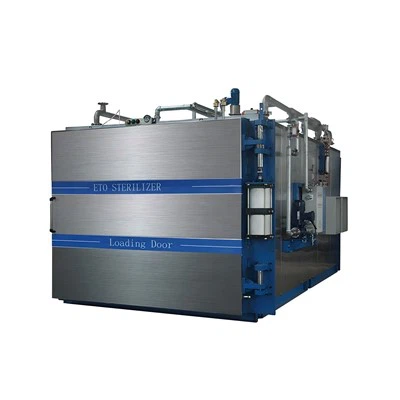
Industrial EO Sterilizer For more detailed guidelines, you can reference OSHA’s ethylene oxide standard (29 CFR 1910.1048) or the National Institute for Occupational Safety and Health (NIOSH) EtO safety bulletins. But don’t stop there—reach out to our team to discuss your facility’s specific needs, whether you’re looking to update your PPE stock, train your staff, or ask questions about safe handling protocols. We’re here to help, no matter how big or small your operation is.
Hangzhou Riches Engineering Co., Ltd.
Hangzhou Riches Engineering Co., Ltd. is one of the most professional eto gas manufacturers and suppliers in China, specialized in providing high quality custom service and ODM service. We warmly welcome you to buy high-grade eto gas for sale here from our factory.
Address: No. 368, Wenjiao Road, Fuyang District, Hangzhou
E-mail: jason@riches-company.com
WebSite: https://www.eto-sterile.com/
