When I first started working with wire galvanizing equipment clients, I’d listen to them describe the same frustration over and over: they’d invest in state-of-the-art line equipment, follow every step from their operator manual, and still end up with wire that had uneven coating—too thin in some sections, too thick in others, or worse, bare spots that lead to premature rust, especially for wire destined for outdoor fencing, automotive components, or construction fasteners. As a wire galvanizing equipment supplier, this isn’t just about selling a machine; it’s about making sure that machine delivers consistent, uniform coating that holds up to real-world use. Over 12 years of refining our systems and walking alongside clients through their daily operations, I’ve learned that uniform galvanized coating isn’t a “set-it-and-forget-it” trick—it’s a combination of equipment design calibration, material handling precision, and small, consistent checks that turn good equipment into great results. Today, I want to break down exactly what we teach every client to nail uniform coating, using lessons we’ve tested in factories from Midwest steel mills to small specialty wire shops. Wire Galvanizing Equipment
First, let’s start with the part of galvanizing most people don’t think about until something goes wrong: the pre-treatment process. Galvanizing doesn’t work well on dirty or oxidized wire, and bad pre-treatment is the number one cause of uneven coating—more so than even line speed or zinc temperature. I once had a client in Ohio run a 16-gauge steel wire line for three months, and their coating kept coming out blotchy; we thought it was their degreaser concentration until we inspected their pre-treatment tanks. Their degreaser was only at 2% instead of the recommended 4%, and their pickling tank had leftover iron sludge that was sticking to the wire before it even hit the flux bath. That’s a common mistake: operators often let pre-treatment maintenance fall to the bottom of their to-do list, but it’s the foundation of uniform coating. Our equipment comes with in-line sensors that automatically measure degreaser pH and pickling solution iron content, so operators get an alert when levels drift, not a surprise at the end of a shift. But even with sensors, operators need to understand why each step matters. Degreasing uses a combination of alkaline solution and mechanical agitation to remove drawing oils, rust inhibitors, and mill scale—any leftover oil will create a barrier between the zinc and wire, leading to thin or patchy coating. Pickling, usually with hydrochloric or sulfuric acid, etches the wire surface to remove mill scale, but if the iron content in the pickling solution gets too high (above 5-6%), it stops working and deposits iron onto the wire, which creates uneven zinc adhesion. Then there’s flux: a zinc ammonium chloride solution that prevents oxidation on the wire before it enters the molten zinc. Too thin a flux layer means oxidation, too thick means excess flux burns into the zinc and causes rough, uneven coating. We train our clients to check flux specific gravity every two hours, and our equipment has a flux wiper system that blows excess solution off the wire with controlled air pressure—this is a small add-on that eliminates 30% of flux-related unevenness, per our client data.
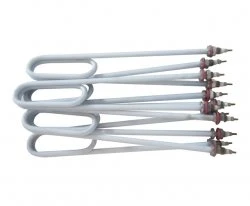
Next, the molten zinc bath itself is the heart of the process, and its consistency is non-negotiable for uniform coating. I’ve seen lines where the zinc bath temperature varies by 20°C across the length of the tank, just because the heating elements are old or unevenly spaced. When zinc is too cold, it sticks in clumps on the wire; too hot, it flows unevenly and can cause “spangle” issues where coating thickness varies. Our equipment uses submerged heating elements instead of surface burners, which keep the entire bath temperature within ±2°C—no hot spots, no cold zones. But temperature isn’t the only factor here: the bath’s chemical composition matters too. Iron content in zinc is a natural byproduct of the wire melting into the bath, and when iron levels exceed 0.03%, it forms intermetallic layers that make the coating rough and inconsistent. We recommend our clients test bath iron content daily using a simple titration kit (we even include a set with every machine we sell), and adjust by adding pure zinc ingots to dilute the mixture, or skim excess dross from the bath surface. Dross is that gray, crumbly layer that forms on top of the zinc—if it sticks to the wire as it pulls through, it creates thick, lumpy spots. That’s why our baths have adjustable weirs at the entry and exit points that keep dross from being pulled up with the wire, and we train operators to skim the bath for dross every four hours, using a fine-mesh skimmer that doesn’t disrupt the bath surface.
Then there’s the line speed and wire tension—these two are linked, and getting them right is like walking a tightrope. If line speed is too fast, the wire doesn’t have enough time to coat evenly in the zinc bath; too slow, and excess zinc hangs on, leading to thick, heavy coating that wastes material and can crack during bending. Most operators set line speed based on the type of wire, but they forget that line speed also interacts with bath temperature and zinc concentration. For example, thin 20-gauge wire needs a faster line speed (around 60 meters per minute) than thick 8-gauge wire (around 25 meters per minute), but you have to adjust for zinc temperature: if the bath is a bit cooler, you slow line speed by 5 meters per minute to give the zinc time to flow evenly. The other half is tension: if the wire has uneven tension as it moves through the line, one side of the wire will pull through the bath faster than the other, leading to uneven coating on the cross-section. That’s a common issue with older equipment that uses fixed rollers—our modern lines use dancer roller systems that maintain constant, adjustable tension across the entire wire, even when spools are changing or wire diameter shifts. I had a client in Texas with a line that kept producing uneven coating on 12-gauge wire, and after we adjusted the dancer roller tension from 15 lbs to 22 lbs, their coating uniformity jumped from 82% to 97%—that’s a huge difference just from a tension setting I’d never considered before.
Another often-overlooked step is the post-coating wiping system, which is what controls coating thickness after the wire leaves the zinc bath. This is where a lot of clients cut corners, using basic air knives that don’t adjust for wire diameter. Air wiping works by blowing compressed air at the wire to remove excess zinc, but the pressure and angle have to be exactly right. Too much pressure blasts zinc off unevenly, creating thin spots; too little, and excess zinc clings on. Our equipment comes with variable-pressure air knives that adjust automatically based on real-time wire diameter sensors, and we train operators to set the angle of the air knife at a 15-degree angle to the wire, pointing in the opposite direction of the wire’s travel—this angle removes excess zinc without leaving streaks. For specialty wire, like flat wire or wire with a rectangular cross-section, we offer custom wiping rollers that conform to the wire shape, which is impossible with standard air knives. I remember a client making automotive seat belt wire with a flat profile; they were using round air knives and their coating was 20% thicker on the flat edges than the sides. After we installed the custom wiping rollers, that discrepancy dropped to less than 5%, which made their parts pass all of their automotive adhesion tests without rework.
Now, let’s talk about operator training and consistent maintenance—this is the secret sauce that makes even the best equipment work. I’ve visited clients with identical wire galvanizing equipment that get wildly different results, and 9 times out of 10, it’s not the machine—it’s the operator. One client in Indiana had a single operator who could run the line at 98% uniformity, while the other two operators on the same line only hit 85%. When we sat down with that star operator, she told us she did five small checks every shift that no one else was doing: she checked pickling iron content at the start of each shift and mid-shift, wiped the flux wiper jets clean every hour, calibrated the air knife pressure against a test wire every morning, and recorded every setting so she could spot drift before it caused issues. That’s the kind of consistency that can’t be programmed into a sensor— operators need to understand why each check matters, not just follow a checklist. That’s why every machine we sell includes a full week of on-site training for operators, plus ongoing access to our technical team, so if an operator has a question at 2 a.m. during a production run, they don’t have to wait until morning to get an answer. We also offer quarterly maintenance plans that include calibrating sensors, checking heating elements, and replacing wear parts, which prevents small issues from turning into big ones that mess up coating uniformity.
Let’s address some common myths I hear from new clients too, because these myths lead to mistakes. First myth: “Thicker wire needs hotter zinc.” Not exactly—thicker wire can handle a slightly lower temperature, because it takes longer to heat up, and cooler zinc flows more evenly on larger surfaces. The second myth: “More flux means better adhesion.” No, excess flux burns into the zinc bath and causes dross, which is bad for coating uniformity. Third myth: “Line speed is the only thing that affects coating thickness.” I’ve seen operators adjust line speed instead of checking tension when coating is uneven, and that just makes things worse. The fourth myth: “You don’t need to clean the air knives—they self-clean.” No, zinc dust and dross build up in the jets, which block air flow and create uneven pressure, leading to streaks in the coating.
At the end of the day, ensuring uniform coating with wire galvanizing equipment is about paying attention to the details that most people skip. It’s not about buying the most expensive machine on the market—it’s about calibrating pre-treatment to remove every trace of contamination, maintaining the zinc bath at a consistent temperature and low iron content, adjusting line speed and tension for your specific wire, using a properly calibrated wiping system, and making sure your operators have the training to keep every step consistent. Every client we work with has a unique set of needs, whether they’re running small specialty wire for crafts or large-diameter wire for construction, so we tailor our equipment and support to match their exact output requirements. If you’re struggling with uneven coating, or you’re ready to upgrade your line to get more consistent, longer-lasting galvanized wire, we’re here to walk you through every step—from equipment setup to ongoing training and support. Reach out to our team to discuss your needs, so we can help you get the uniform coating your products demand.
Hot Dip Galvanizing Equipment Parts References
- ASM International. (2005). Galvanizing of Steel Wire and Rod. Volume 4: Metals Handbook, 10th ed.
- Tardiff, A. (2018). The Impact of Pre-Treatment Parameters on Galvanized Coating Uniformity. Journal of Surface Engineering and Advanced Materials, 8(2), 45-52.
- Steel Manufacturers Association. (2021). Best Practices for Continuous Wire Galvanizing Line Operation. Technical Report No. GA-2021-003.
- Zhang, L., et al. (2020). Effects of Bath Temperature and Iron Content on Zinc Coating Thickness in Continuous Galvanizing. Journal of Materials Processing Technology, 283, 116789.
- European General Galvanizers Association. (2019). Operator Training Handbook for Wire Galvanizing Lines. 3rd ed.
Jinzhou Hongri Galvanizing Equipment Co., Ltd.
As one of the most professional wire galvanizing equipment manufacturers and suppliers in China, we’re featured by quality products and good price. Please rest assured to buy durable wire galvanizing equipment for sale here from our factory. We also accept customized orders.
Address: Yingpan Industrial Park, Taihe District, Jinzhou City. Address: No. 90, Gongwei Street.
E-mail: rsea.jz@163.com
WebSite: https://www.hrgalvanize.com/
