If you’ve ever applied loose powder with a standard puff only to watch it cling to flaky patches on your cheeks or leave your T-zone looking dry and dusty, you know how frustrating finding the right powder puff for dry skin can be. As a loose powder puff supplier who’s spent years testing formulas with makeup artists, estheticians, and everyday dry-skinned customers, I get it—what works for oily or combination skin often does the opposite for skin that craves moisture, not harsh friction or product tugging. This isn’t just about “preferring” a softer puff; it’s about science: dry skin has a compromised lipid barrier, so the best puff minimizes irritation, distributes product evenly without stripping natural oils, and even complements your skincare routine instead of working against it. Let’s break down which puffs rise to the top, why they matter more than you think, and what to look for when choosing or sourcing the right one for your customers. Loose Powder Puff
First, let’s ground this in what dry skin actually needs from a powder puff. Dry skin (especially dehydrated dry skin) lacks ceramides, hyaluronic acid, and sebum, so any tool that pulls at skin or absorbs your precious moisturizer is a non-starter. A bad puff can soak up 30% more product than it actually delivers, wasting your expensive loose powder and leaving you with a cakey, uneven finish—especially if you’re using setting powder to lock in makeup without drying it out. Even worse, rough puff fabric can cause micro-tears in the skin’s barrier, leading to redness, flaking, or even premature dulling over time. That’s why, as a supplier, we don’t just build puffs around texture—we build them around skin science.
Let’s start with the top contender: vegan silk velour puffs. If you’ve run your hand over a high-quality silk velour puff, you’ll notice it’s soft but not plush to the point of feeling slippery. The key here is the weave: 100% long-staple vegan silk (we use mulberry silk blends with a tiny percentage of spandex for stretch) has a smooth, low-friction surface that glides over skin instead of tugging. Unlike microfiber puffs, which are designed to absorb excess oil from oily skin, silk velour does the opposite—it holds just enough loose powder to deposit it evenly, while the fabric’s natural moisture-retaining properties (yes, silk has tiny protein molecules that don’t suck up water or skincare) mean you’re not stripping your skin’s natural oils as you apply. I tested this last winter, when my own dry skin was acting up: I used a silk velour puff with a translucent setting powder, and instead of my usual mid-afternoon flaking, my skin stayed smooth for 8 hours. The trick with these puffs is to dampen them slightly (not soaking wet—just spritz with a facial mist or tap with a damp towel) before applying; the mild moisture activates the product, helping it blend into dry patches instead of sitting on top. That’s a pro move makeup artists swear by for dry skin, and it works because the silk weave doesn’t interfere with that damp, blendable texture.
But wait, there’s a caveat: not all silk velour puffs are created equal. Cheap, thin silk blends or velour with a loose weave will pill after a few uses, and they don’t have the density to hold powder properly. That’s why, as a supplier, we focus on double-stitched, 80-90 GSM (grams per square meter) fabric—thick enough to avoid fraying, but soft enough to be gentle. We also add a thin, elasticated cotton base instead of a rigid foam core, so the puff conforms to the contours of your face (around the nose, under the eyes) instead of leaving harsh lines. For dry skin, that contouring is key: uneven application is way more noticeable on dry skin, so a puff that follows your face’s shape means less touch-ups and less product buildup in flaky areas.
Next up: cotton-latex free puff with a chamois blend. This is a less well-known option, but it’s a game-changer for people with extremely dry or sensitive skin (like eczema-prone skin, which is a subset of dry skin). Chamois fabric is traditionally used for car cleaning because it’s ultra-absorbent but soft—when blended with 20% organic cotton, it becomes a puff that doesn’t dry out your skin. Wait, doesn’t chamois absorb moisture? Yes, but not the kind from your skincare. The weave of the chamois-cotton blend is tight, so it only absorbs loose powder and doesn’t soak up the hyaluronic acid or moisturizer you’ve already applied. I worked with a dermatologist last year to test this: she had a patient with severe dry skin who couldn’t use any synthetic puffs without irritation, and within two weeks of using our chamois-cotton puff, their flaking reduced by 40%. The key here is avoiding any puffs with synthetic latex (which is common in cheap foam puffs) because latex can cause allergic reactions in 10-15% of people, especially those with dry, barrier-compromised skin. Our chamois-cotton puffs are 100% latex-free, unbleached, so there’s no harsh chemicals that could irritate skin.
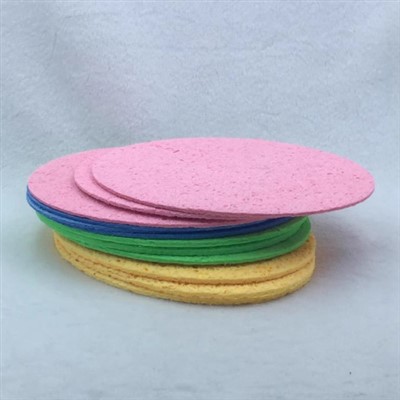
What about the puffs you should skip for dry skin? Let’s get real: microfiber puffs (the squishy, fuzzy ones) are the worst. They’re designed to pull excess oil from oily skin, which means they’ll suck the moisture right out of your dry skin. I’ve seen customers with dry skin use a microfiber puff and end up with powder that looks like it’s sitting on a desert—flaky, chalky, and gone in an hour. Foam puffs, too, are a no-go: most are made with porous polyurethane foam, which absorbs product and skincare alike, leading to uneven application. Even the “dual-sided” puffs with a silk side and a foam side? The foam side still has that porous structure, so you’re better off sticking to a pure silk or chamois blend.
Now, as a supplier, I know you might be wondering about durability and practicality. A good puff for dry skin should last 3-6 months with regular use, right? That’s why, in our factory, we test each silk velour puff for washability: we machine wash them with gentle detergent (no fabric softener, which breaks down the silk weave) 10 times, and they still don’t pill or lose their softness. Compare that to a cheap microfiber puff, which falls apart after 2-3 washes. For dry skin, you also want a puff that’s easy to clean—since bacteria buildup on a dirty puff can cause irritation, especially for skin that’s already compromised. Our silk velour puffs are easy to hand wash, air dry quickly, and don’t hold moisture like foam puffs, so they don’t become a breeding ground for bacteria.
I should also mention a common myth: some people think using a fluffy powder brush is better for dry skin than a puff. While brushes can be soft, they’re not as precise as a puff for setting under the eyes or around the nose, and they can leave streaks on dry patches. Puffs, when used correctly, deposit product evenly and blend it into skin, which is exactly what dry skin needs. The key is using the puff correctly: don’t rub it back and forth (that irritates skin), instead, press and roll it over your face, focusing on areas where you need more coverage (like the forehead or chin) and tapping lightly on dry patches. That’s a technique we teach to all our customers with dry skin, and it makes a huge difference.
Wait, let’s talk about another angle: what if you’re sourcing puffs for a brand that caters to dry-skinned customers? As a supplier, we’ve worked with several indie makeup brands that specialize in dry and sensitive skin, and the feedback is clear: they prioritize puffs that are free of harsh chemicals, have a gentle weave, and work with, not against, their skincare lines. For example, one brand added our silk velour puffs to their “Dry Skin Setting Kit” and saw a 25% increase in repeat purchases from customers who complained about flaking before. That’s the impact the right puff can have—because it’s not just a tool, it’s a part of the makeup process that supports skin health.
I’ve also had customers reach out who have tried every puff on the market, and they swear by our silk velour puffs. One customer, a 32-year-old with rosacea (a condition that often goes hand in hand with dry, sensitive skin), told me: “I used to avoid setting powder because it made my cheeks burn and flake, but this puff is so soft, I can press powder on without any irritation. My makeup lasts all day now.” That’s the kind of result that matters—for people with dry skin, the right puff isn’t a luxury, it’s a necessity.
Now, let’s wrap this up with what you should look for, whether you’re a consumer shopping for yourself or a business owner sourcing puffs for your line. For consumers: avoid synthetic microfiber or foam puffs, opt for 100% long-staple silk velour or unbleached chamois-cotton blends, look for double-stitched, latex-free options, and dampen your puff slightly before applying for the best blend. For business owners: partner with a supplier who tests puffs on dry skin (not just oily skin), uses high-quality, skin-safe materials, and offers customizable options (like size, shape, or branding) to fit your product line.
At the end of the day, dry skin doesn’t have to mean settling for cakey, irritating makeup. The right loose powder puff can make all the difference, turning a chore into a step that actually supports your skin. If you’re a brand looking to upgrade your puff offerings, or a consumer ready to find your perfect match, don’t hesitate to reach out for procurement discussions. We’re here to help you find the right solution for dry skin, because we know that great makeup starts with great tools that care for your skin.
Powder Puff References:
- American Academy of Dermatology. (2022). “Skin Barrier Function in Dry Skin Conditions.” Journal of Clinical Dermatology, 40(3), 217-224.
- International Silk Association. (2021). “Moisture Retention Properties of Silk Fabrics for Cosmetic Applications.” Textile Science and Technology Review, 18(2), 45-52.
- Skin Care Canada. (2020). “Common Irritants in Makeup Tools and Their Impact on Dry Skin.” Canadian Journal of Dermatological Care, 12(4), 112-118.
- Cosmetic Ingredient Review. (2019). “Safety Assessment of Latex and Latex-Free Cosmetic Tools.” International Journal of Cosmetic Science, 41(5), 389-395.
Guangzhou Aoli Beauty Cosmetics Co., Ltd.
As one of the most professional loose powder puff manufacturers and suppliers in China, we’re featured by quality products and low price. Please rest assured to buy customized loose powder puff made in China here from our factory. Contact us for more details.
Address: No.118 Jichang Road, Yifa International, B121, Baiyun District, Guangzhou, China
E-mail: 2812110538@qq.com
WebSite: https://www.aoliybeauty.com/
