If you’re running a warehouse, distribution center, or e-commerce fulfillment spot, odds are you’ve heard of AS/RS first, then conveyors — or vice versa. As an AS/RS supplier, I talk to warehouse managers every week who think these are two separate pieces of equipment, working in parallel. But the truth? They don’t just work side-by-side — they’re totally dependent on each other for any kind of efficient, large-scale operation. Over the last 12 years selling AS/RS solutions, I’ve seen what happens when the interaction is messy, and what makes it click. Let’s break that down like we’re chatting over coffee, no jargon overload — I’ll even throw in the acronyms you’ll actually use day-to-day. Automated Storage and Retrieval System
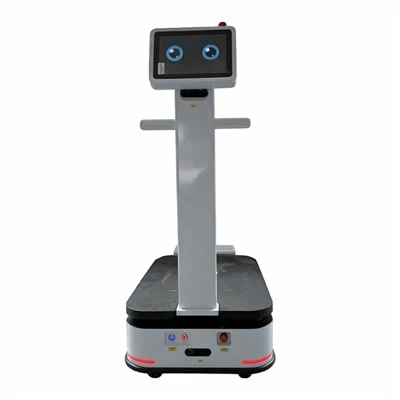
First, let’s start with what each thing does, quick, to set the stage. AS/RS is your automated pick-and-store brain: that’s the rack system, the cranes that zoom up and down aisles, the shuttles in deep storage lanes, all that stuff. It lives in tight, high-density space, holds 90% of your inventory, and never slacks on accuracy — no walking 3 miles to pick a box, no forgetting where you put something. Conveyors, on the other hand, are your physical movement highways: belts, rollers, overhead trolleys, whatever you use to move a box from Point A to Point B without a forklift driver. But those two can’t operate alone. The conveyors can’t pull inventory off the floor if the AS/RS doesn’t flag where it is, and the AS/RS can’t deliver a single SKU if there’s nowhere to send it after it picks it. That interaction is where the whole system earns its keep.
Let’s walk through a real order to make this concrete. Say a customer orders a laptop, a set of wireless headphones, and a portable charger. That order comes into your warehouse management system (WMS — everyone uses this, no exceptions) at 2 a.m. The WMS doesn’t just send the order to a picker — it tells the AS/RS exactly what SKUs are needed, how many, and where those SKUs are stored in the rack. The AS/RS crane (let’s call it a unit load crane, but crane works) zooms to the right rack level, grabs the bin holding the headphones, drops it onto a conveyor. That’s step one: AS/RS moves the stored item to the interface point, which is basically the handoff zone. If the conveyor wasn’t there to catch that bin, the AS/RS would have nowhere to put it, and that order would get delayed hours.
But it’s not a one-way handoff. The conveyor has to send the AS/RS a signal too. Conveyors track weight, dimension, and damage in real time — if a bin is oversize, or too heavy, or dented so bad it can’t move, it sends a alert straight to the AS/RS. No more guessing, no more a crane dropping a 50-pound bin onto a conveyor that can’t handle it, which would jam both the conveyor and the crane. Last year, we had a customer who skipped that step and tried to rig their AS/RS to work with a basic conveyor; they had 17 jams in the first month, shut down for 3 days total. After we added that two-way communication, jams dropped to less than 2 a month. That’s the interaction working.
There’s another part of the interaction that most people miss: the sortation layer. Once that bin from the AS/RS hits the conveyor, the conveyor’s sortation system (sorters, diverters, all that) has to scan every barcode on the bin to figure out which order it belongs to, which shipping lane it needs to go to, even which pack station it should head to. If that scan doesn’t get sent to the AS/RS, the AS/RS won’t know that bin is en route to be packed, so it won’t restock that SKU when it’s emptied. Wait, yeah — the AS/RS doesn’t just pick; it also manages restock. So if a bin gets sent to a pack station, the conveyor tells the AS/RS, and the AS/RS schedules a new bin to come off the rack when the pack station is ready. No running out of stock mid-order, no overloading the conveyor with bins waiting to be packed.
We deal with a lot of small warehouses who try to cut corners here, right? They’ll buy a cheap AS/RS and a cheap conveyor, hook them up, and wonder why nothing works. The problem isn’t the equipment — it’s the lack of sync between the two. Let’s talk about how that sync actually works, technically, without all the boring textbook stuff. It’s all about three systems talking to each other: your WMS, the AS/RS’s control system (we call it ACS, Automated Control System), and the conveyor’s control system (usually CCS, Conveyor Control System). These three need a real-time data link — no batch updates every 5 minutes, we’re talking millisecond-level here. If the ACS sends a bin to the CCS, the CCS has to acknowledge it within 200 milliseconds, otherwise the ACS holds back the next bin, no exceptions. That’s non-negotiable for high-volume warehouses.
Another big part of the interaction is load handling. The AS/RS is built to handle specific bin sizes, weights, and pallets — you can’t shove a 48-inch pallet meant for a full truck onto a small conveyor, and vice versa. The conveyor has to adjust its speed and lane width based on what the AS/RS is sending. If a pallet full of bulky towels comes off the AS/RS, the conveyor widens its lanes and slows down a little, so nothing falls. If a small, delicate glassware bin comes off, the conveyor tightens its rollers and softens the start/stop speed so it doesn’t crack. We once had a customer who tried to use the same conveyor for AS/RS pallets and random floor inventory — it kept breaking glass, which cost them $12k in returns in three months. After we adjusted the conveyor to sync with the AS/RS’s load specs, breakage dropped to 0.2% — that’s how specific the interaction needs to be.
Then there’s the reverse side: returning inventory, or restocking. A lot of people only think about picking, but the AS/RS and conveyor work together for restock too. If a pack station finds a damaged item, it sends a signal to the conveyor, which routes that damaged bin straight back to the AS/RS’s return area. The AS/RS then logs the damaged item, sends a report to inventory management, and schedules a time to move a new bin from storage to the pack station. No more forklifting damaged boxes across the warehouse, no more manually logging bad stock. That’s the interaction working for the back office, not just the front end.
We also see this in e-commerce fulfillment centers during peak season — think Black Friday, Cyber Monday, holiday rushes. Last Cyber Monday, a client of ours with a 100,000 square foot warehouse processed 12,000 orders in 12 hours. Their AS/RS picked 95% of those SKUs, and the conveyor system synced so tight that there were zero dead times between pick and pack. If the AS/RS had picked a bin and the conveyor had jammed, they would have lost at least 200 orders that day. But because their systems talked to each other, they hit their 98% on-time shipping rate — that’s what makes the investment worth it.
Now, let’s get real about mistakes people make with this interaction. The most common one is not designing the two systems at the same time. A lot of warehouse managers will buy an AS/RS first, then hunt for a conveyor that fits, or vice versa. That’s a recipe for disaster. For example, if your AS/RS picks a bin in 10 seconds, but your conveyor takes 30 seconds to move it to the pack station, you’ve got a bottleneck. You can’t fix that after installation — you have to plan for the timing between them from day one. Another mistake is skipping the data sync: some cheap conveyors only scan barcodes once, not sending data back to the AS/RS, so you don’t have a record of where inventory is at all times. That defeats the whole purpose of AS/RS — it’s automated, so you don’t have to count stock manually.
As an AS/RS supplier, we don’t just sell the rack and cranes — we handle the integration with the conveyor too. We’ll come in, look at your current volume, your SKU sizes, your peak season needs, and make sure the AS/RS’s ACS and the conveyor’s CCS are set up to talk to each other seamlessly. Last year, we had a regional grocery chain that wanted to cut their order fulfillment time by 40%. They had a conveyor system that was 10 years old, and they thought they’d have to replace it. Instead, we adjusted the AS/RS’s picking logic to sync with their existing conveyor’s sortation, and they hit their 40% goal without replacing anything. That’s the power of a good interaction, not just new equipment.
Wait, let’s also mention scalability. If your warehouse grows, your AS/RS and conveyor have to grow together. If you add more cranes to your AS/RS, your conveyor has to be able to handle more bins per hour. The interaction has to be flexible enough to adjust. Some systems are hard-coded, so when you add capacity, you have to redo the whole setup. We build our AS/RS with modular control systems, so adding a new crane just means updating the sync code with the conveyor, no big overhaul. That’s a big deal for growing businesses — you don’t want to have to tear out and replace your whole setup every 2 years.
I get it, this stuff sounds complicated if you’re not in the warehouse game. But at the end of the day, the AS/RS and conveyor are a team. The AS/RS is the quarterback that calls the shots on where inventory goes, and the conveyor is the offensive line that moves it where it needs to go, no fumbles, no delays. If they don’t pass the ball, the whole operation stalls. If you’re thinking about upgrading your warehouse, don’t just ask about AS/RS specs or conveyor specs — ask about how they interact. That’s the part that makes or breaks the efficiency, the cost, and your ability to keep up with orders.
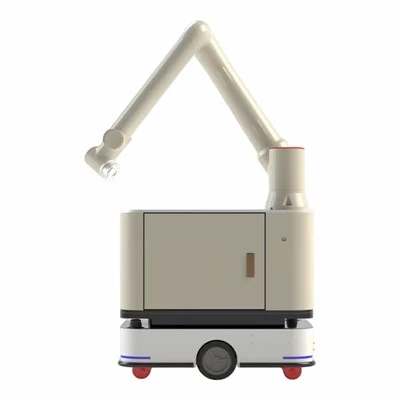
If you’re curious about how your current setup is syncing, or want to put a new system together, get in touch to chat through your needs. No sales pitch, no jargon — just looking to help you avoid the headaches we see all the time when the interaction between these two systems is off.
Conveying Line References
- Tompkins, J. A. (2020). Warehouse Planning and Design. Wiley.
- Frazelle, E. H. (2019). World-Class Warehousing and Material Handling. McGraw-Hill.
- Material Handling Industry (MHI). (2022). AS/RS and Conveyor Integration Best Practices. MHI Publications.
Shenzhen Ginnee Intelligent Warehousing Robotics Co., Ltd.
As one of the most professional automated storage and retrieval system suppliers in China, we’re featured by quality products and low price. Please rest assured to wholesale durable automated storage and retrieval system in stock here and get quotation from our factory. We also accept customized orders.
Address: Room101, No.162 JunXin Road, Niuhu Community, Guanlan Strect, Longhua District, Shenzhen, Guangdong Province, China.
E-mail: huangyongmei@szginnee.com
WebSite: https://www.ginneerobotics.com/
