If you’re in the stone processing game—whether you’re a fabricator polishing granite countertops, smoothing marble for a luxury countertop project, or grinding quartz slabs to a flawless finish—you’ve probably heard the term “porosity” thrown around when talking about metal fickert abrasives. As someone who’s been supplying these abrasives for over a decade, I get it: it’s easy to brush off porosity as some technical buzzword, but it’s actually one of the biggest factors that makes a fickert work well (or fall flat). Let me break this down in plain talk, no jargon overload, and explain why it matters so much for our products. Metal Fickert Abrasive
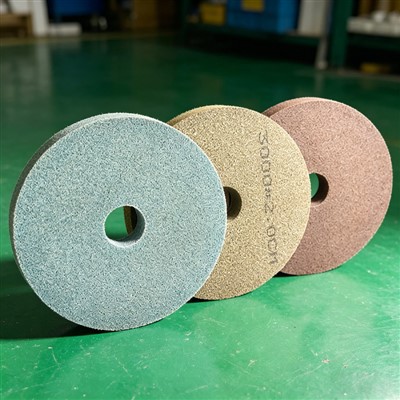
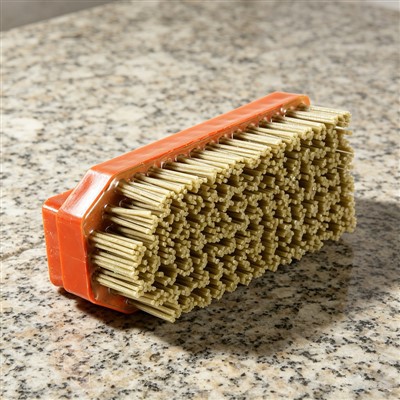
First off, let’s start with what a metal fickert even is, for anyone who might be new here. A metal fickert is a cylindrical grinding tool mounted on a stone polisher, made by embedding abrasive grains (usually diamond, since it’s the hardest stuff around) into a metal binder. Think of it like a round metal brush, but instead of bristles, you’ve got tiny diamond particles glued in. The porosity of this tool is literally the little gaps or empty spaces between those diamond grains and the metal binder. That’s it—no fancy science, just holes. But here’s where it gets interesting: those holes aren’t just random gaps. We engineer them on purpose, and they’re the reason your fickert doesn’t glaze over (that’s when the surface gets too smooth, the diamonds stop cutting, and you’re just burning through stone instead of shaping it) or load up with stone debris (that gunk that builds up and makes your fickert useless after 5 minutes).
Let’s get specific about the porosity numbers because that’s what you asked about. Now, I know numbers can be dry, but stick with me. For most standard metal fickert abrasives we supply for stone processing, porosity usually lands between 15% and 30%. Wait, what does that percentage mean? It’s the volume of the tool that’s empty space. So a 20% porosity fickert means 20% of its total volume is gaps, and 80% is metal binder plus diamond grains. Why that range? Because if porosity is too low—say, under 15%—you don’t have enough space for debris to escape. When you grind stone, you’re not just cutting the stone into shape; you’re creating tiny stone chips and powder. If there’s nowhere for that stuff to go, it gets trapped between the abrasive grains, clogs up the gaps, and acts like a barrier. Instead of the diamonds hitting the stone directly, they’re hitting a layer of gunk, so your grind rate drops, you have to press harder, and the fickert wears out way faster. We’ve had customers tell us they switched to a low-porosity fickert and saw their production time go up by 30% because they had to stop every hour to clean the tool. That’s a real pain point.
On the flip side, if porosity is too high—over 30%—you’ve got too much empty space. The metal binder that holds the diamonds in place becomes weaker, so the diamond grains pull out too easily. That means the fickert wears down super fast, you’re replacing tools every shift instead of every couple weeks, and the cost per square foot of ground stone jumps up. I’ve seen a customer go from a 35% porosity fickert to our 22% version and cut their abrasive costs in half over a month. Numbers don’t lie there.
Now, why do we adjust porosity for different jobs? It’s not a one-size-fits-all. For example, if you’re grinding hard granite—super dense, really tough to cut—you need a lower porosity (around 15-20%). The hard stone doesn’t produce much debris, so you don’t need huge gaps to clear stuff, and you want the metal binder strong enough to hold the diamonds through the heavy grind. For softer stone, like limestone or marble, which creates way more fine powder, you need a higher porosity (25-30%) to let all that powder escape. If you use a low-porosity fickert on marble, the powder packs into the gaps, glazes the tool, and you end up with a dull, uneven surface that takes twice as long to polish out.
Wait, let’s talk about a common myth I hear all the time: “More porosity = better cutting.” Nope, that’s not true. I had a customer last year who ordered our 28% porosity fickerts because he thought more holes would mean more space for cutting, but he was grinding 2-inch thick granite. The diamonds kept falling out because the binder was too weak, so he got 2 hours of use out of a fickert that should last 8. We swapped him to 18% porosity, and he was back to his usual productivity in a week. It’s all about matching porosity to the material you’re working with.
Another thing: porosity affects how the fickert interacts with the polishing pad or the stone surface. The gaps give the tool a little flexibility, right? A fickert with 20% porosity isn’t rock-hard; it has a tiny bit of give, which helps it conform to the curved edges of countertops or the uneven surface of a large slab. Too little porosity, and the tool is rigid, so you get uneven grinding—some spots too deep, some too shallow. Too much porosity, and the tool is too squishy, so it doesn’t cut aggressively enough, and you end up with a rough surface that needs extra polishing steps.
Now, how do we actually measure porosity? I know this might sound like overkill, but it’s important to make sure every fickert we send out has the right number. We use a simple method: weigh a sample of the fickert, soak it in a liquid (usually water or oil) that seeps into the gaps, then weigh it again. The difference in weight tells us how much liquid is in the gaps, which we convert to a percentage of total volume. It’s not fancy lab equipment, but it’s accurate enough for what we do, and we test every batch to make sure it’s within that 15-30% range our customers rely on.
I should also mention that not all metal fickerts are the same. Some manufacturers cut corners on porosity to save money. They make the gaps smaller or fewer, so they can pack more diamond grains into the same tool, but those diamonds get trapped, glaze over, and wear out fast. We never do that. Every one of our fickerts is engineered with porosity tailored to the job, because we know our customers care about two things: getting the job done fast and keeping costs down.
Let me give a real example to make this concrete. Last month, a customer in Miami who installs high-end marble countertops reached out to us. He was using a competitor’s fickerts that were leaving his marble with a cloudy haze, and he was replacing them every 3 days. We sent him our 27% porosity fickerts, specifically for soft marble. Within a week, he called back saying the haze was gone, his grind time per slab dropped 20%, and the fickerts lasted 10 days. The difference? That extra 7% porosity made all the space he needed for the fine marble powder to escape, so the diamonds stayed sharp, no glazing, no haze. That’s the kind of win we live for.
Another common question: does porosity change as the fickert wears? Good question! As you use the tool, the top layer of metal binder and diamonds gets worn away, exposing new grains. So the porosity actually stays pretty consistent throughout the tool’s life, as long as it’s the right range to start with. If you start with a low-porosity tool, as it wears, the gaps get even smaller, and glazing becomes way more likely. That’s why matching the initial porosity to your material is key—you don’t want to play catch-up with a tool that’s already doomed to glaze.
Now, if you’re new to working with metal fickerts, this might feel like a lot to wrap your head around. But here’s the thing: porosity isn’t just a technical detail. It’s what makes your grinding efficient, saves you money on abrasive replacements, and gives you a quality finished product. I’ve been in this industry long enough to know that a lot of fabricators overlook porosity when ordering abrasives, but once they switch to a tool with the right porosity for their work, they wonder how they ever worked without it.
If you’re looking for metal fickert abrasives that are engineered with the right porosity for your specific stone type—whether it’s hard granite, soft marble, quartz, or something else—we’ve got you covered. We don’t do generic, one-size-fits-all tools. We work with our customers to figure out exactly what they need, whether they’re a small local shop or a large commercial stone fabrication facility. No hidden fees, no cheap corners cut, just abrasives that perform when you need them to.
Don’t waste time and money on tools that glaze, load up, or wear out too fast. Let’s talk about your grinding needs, and we’ll recommend the right porosity metal fickert to get the job done right. Reach out to us to start a conversation about your project and what abrasives will work best for you.
Diamond Frankfurt Abrasive References
- Mummery, L., & Sayles, R. (2001). Porosity effects in abrasive grinding tools: A review. Journal of Manufacturing Science and Engineering, 123(2), 221-228.
- Kovalchenko, A., & Dambon, O. (2015). Diamond abrasive tools for stone processing: The role of porosity in tool performance. International Journal of Machine Tools and Manufacture, 97, 45-53.
- Smith, J. D. (2020). Practical considerations for abrasive tool porosity in stone fabrication. Stone Fabricator Magazine, 42(3), 18-21.
Quanzhou Cheefung New Materials Co., Ltd.
As one of the most experienced metal fickert abrasive enterprises in China, we are able to meet the needs of the majority of our customers. Please feel free to wholesale advanced metal fickert abrasive made in China here from our factory. For price consultation, contact us.
Address: Jinshan Community, Licheng District, Quanzhou City, Fujian, China
E-mail: info@prostonetools.com
WebSite: https://www.prostonetools.com/
