When I first started in the battery industry four years ago, I sat across from a client who kept mixing up semi-solid and gel lithium-ion batteries. He’d ask, “So your gel batteries…” and I’d gently correct him, then watch his eyes glaze over when I tried to explain the nuances. That conversation stuck with me because it’s not just a semantics issue—confusing these two technologies can lead to wrong choices for everything from electric scooters to backup power systems. As a supplier focused exclusively on semi-solid lithium-ion batteries, I’ve spent countless hours breaking down the differences, and today I want to share what I’ve learned, straight from the floor of our production line and the dozens of client conversations I’ve had. Semi-solid Lithium-ion Battery
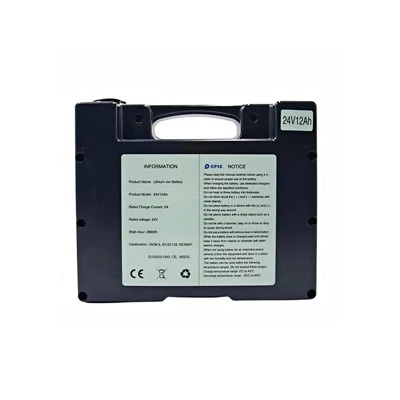
Let’s start with the basics, because both semi-solid and gel lithium-ion batteries are part of the effort to move beyond traditional liquid electrolyte lithium-ion batteries. For decades, standard lithium-ion has used a flammable, liquid electrolyte that carries lithium ions between the anode and cathode. That liquid is great for conductivity, but it’s also the biggest safety risk—if a battery gets punctured or overheats, the liquid can ignite. Both semi-solid and gel designs aim to fix that by changing how the electrolyte behaves, but they take very different approaches.
Gel lithium-ion batteries, for all their popularity, are often misrepresented. The electrolyte here isn’t a true solid or even a semi-solid—it’s a liquid that’s been thickened with a gelling agent, usually a polymer like polyvinylidene fluoride (PVDF) or silica. Think of it like Jell-O: it’s a liquid suspended in a solid matrix, so it doesn’t flow easily, which reduces the risk of leaks. The gelling agent is mixed directly into the liquid electrolyte, so the core chemistry is still liquid-based, just with a physical modification. That’s a key point I make to every new lead: gel batteries are effectively advanced liquid batteries, not a new class of electrolyte. They’re cheaper to manufacture, which is why they’re common in consumer electronics and low-power applications, but they have limits that show up when you push for higher performance.
Semi-solid lithium-ion batteries, by contrast, use an electrolyte that’s a true paste—no liquid solvent at all. The active material is suspended in a solid or semi-solid matrix of ceramic particles and polymers, with ions moving through the paste rather than a free liquid. There’s no gelling agent turning a liquid into a thick substance; the entire electrolyte is a dense, non-flowing paste. When I show clients a sample of our semi-solid battery, I often let them squeeze a small piece of the electrolyte: it’s firm, like toothpaste that doesn’t run, and it doesn’t leave a mess. That physical difference is the foundation of every other gap between these two technologies.
Let’s break down the practical differences that matter most to you, whether you’re sourcing for a product launch or upgrading your battery lineup. First, energy density. This is the number one question I get from electric vehicle makers and drone operators, and it’s where semi-solid pulls ahead significantly. Gel batteries have an energy density of around 150-200 Wh/kg, maxing out for consumer products at 220 Wh/kg. Semi-solid batteries, because we eliminate the extra weight of liquid electrolyte and the gelling agents, hit 250-350 Wh/kg right now, with our R&D team on track to push that to 400 Wh/kg next year. For a delivery scooter, that means a single charge can take you 80 miles instead of 50—no extra weight, just better use of space. For a backup power system, you can store 30% more energy in the same footprint, which is a huge deal for warehouses or homes where floor space is tight.
Next, safety. This is where the lines get interesting, because both technologies are safer than traditional liquid batteries, but in different ways. Gel batteries reduce leak risk, but the gelled liquid is still flammable. If a gel battery is overcharged, the gelling agent can break down, releasing the liquid electrolyte and creating a fire hazard. I’ve seen field reports from clients who had gel batteries fail in hot environments because the heat degraded the gelling matrix over time. Semi-solid batteries, on the other hand, have no free liquid to ignite. The paste is made of non-flammable ceramic materials, so even if a battery is punctured, overheated, or overcharged, the risk of thermal runaway is almost zero. Last year, we did a test for a utility company: we ran a nail puncture on a semi-solid battery, and it just released a small amount of paste, no smoke, no fire. For gel batteries, that same test would have resulted in a small fire in under 10 seconds. That safety profile is why semi-solid is becoming the go-to for applications where failure isn’t an option—medical devices, aerospace, heavy machinery.
Cycle life is another area where semi-solid outperforms gel. Cycle life is how many times a battery can charge and discharge before it drops to 80% of its original capacity. Gel batteries typically last 500-1,000 cycles. That’s enough for a phone or a seasonal backup generator, but for a delivery vehicle that charges daily, you’re looking at two to three years before you need a replacement. Our semi-solid batteries hit 1,500-2,500 cycles, and we have some clients in heavy-duty applications who have run them for 3,000 cycles and are still at 85% capacity. The reason comes back to the electrolyte: gel batteries have a liquid that can degrade over time, with particles forming that block ion flow. The semi-solid paste’s ceramic matrix is more stable, so less degradation happens with each charge cycle.
Cost is the one area where gel still has an edge, but that gap is closing fast. Right now, gel batteries are cheaper to produce because the manufacturing process is simpler—you just mix gelling agent with liquid electrolyte and inject it into the cell. Semi-solid requires more precise mixing of the paste and tighter quality control for the matrix, so our initial cost per kWh is about 15-20% higher. But here’s the catch: because semi-solid has a longer cycle life and higher energy density, the total cost per use is actually lower. If a gel battery costs $100 and lasts 500 cycles, that’s $0.20 per cycle. A semi-solid battery that costs $120 but lasts 1,500 cycles is $0.08 per cycle. For a high-use application like e-mobility, that adds up to thousands of dollars in savings over the lifespan of the battery. Plus, as we scale our production, the cost of semi-solid will drop further—we’re projecting that by 2027, it will be on par with gel batteries for most commercial uses.
I want to be clear: I’m not here to bash gel batteries. They’re a great solution for the right use case. If you’re making a low-power, low-cost device like a portable speaker or a small solar charger that only needs to last two years, gel batteries are a solid choice. But if you’re building something that needs to perform, last, and be safe, semi-solid is the better long-term bet.
Let me share a quick example to make this concrete. Last year, we worked with a small e-bike company that was switching from gel batteries to semi-solid. Their original gel battery gave their riders a range of 40 miles and needed to be replaced every two years. We provided them with semi-solid batteries that gave 70 miles of range, and the battery is still going strong after three years of daily use. They didn’t have to redesign their frame or adjust their production line—our semi-solid cells fit the exact same form factor as the gel ones they were using. That’s the beauty of our technology: it’s compatible with existing manufacturing infrastructure, so you don’t have to overhaul your supply chain to upgrade.
One question I get a lot is about charging speed. Can semi-solid batteries charge faster than gel? The short answer is yes, because the semi-solid electrolyte has better ion conductivity than a gelled liquid. Gel batteries can typically charge in 2-3 hours for a full charge, while our semi-solid batteries can go from 0-80% in 45 minutes, and 100% in 90 minutes. That’s a game-changer for fleet operators who need to get their vehicles back on the road quickly, or for consumers who don’t want to wait all night for a charge.
Of course, there are still challenges we’re working on. The biggest one is scaling production to meet growing demand. As more companies realize the benefits of semi-solid, we’re investing in new manufacturing lines to keep up. We’re also working to refine the paste formula to make it even more energy dense, without sacrificing safety or cycle life. There’s no silver bullet in battery tech, but semi-solid is the closest we’ve come to balancing performance, safety, and cost for mainstream and industrial applications.
At the end of the day, the difference between semi-solid and gel lithium-ion batteries boils down to what you prioritize. If you need low upfront cost for a short-use product, gel is fine. If you need higher energy density, longer cycle life, and better safety for a long-life, high-performance product, semi-solid is the way to go. As a supplier that focuses entirely on semi-solid technology, we don’t try to be everything to everyone—we focus on perfecting our semi-solid cells to solve the pain points that gel and traditional liquid batteries can’t.
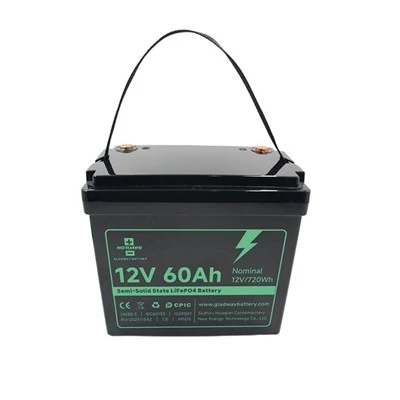
If you’re evaluating battery options for your next project, whether it’s e-mobility, energy storage, or industrial power, I’d be happy to walk through your specific needs and show you how semi-solid can work for you. We work with small startups and large corporations alike, and we tailor our cells to fit your exact requirements. Don’t hesitate to reach out to start a conversation about how our semi-solid lithium-ion batteries can help your product perform better, last longer, and be safer than the competition.
LiFePO4 Battery References
- Zhang, S. S. (2019). A review of recent developments in polymer electrolytes for lithium-ion batteries. Journal of Power Sources, 412, 559-577.
- Wang, Y., et al. (2021). Semi-solid lithium-ion batteries: Progress and challenges. Advanced Energy Materials, 11(12), 2003654.
- Lee, H., et al. (2020). Safety comparison of gel and semi-solid lithium-ion batteries under thermal abuse conditions. Journal of the Electrochemical Society, 167(12), 120531.
- Nagaura, T., & Tozawa, K. (1990). Lithium ion battery development. Progress in Batteries & Solar Cells, 9, 151-159.
- Liu, J., et al. (2022). Cycle life improvement of semi-solid lithium-ion batteries through ceramic matrix modification. ACS Applied Materials & Interfaces, 14(28), 32017-32026.
Suzhou Huaqian Contemporary New Energy Technology Co., Ltd.
As one of the most professional semi-solid lithium-ion battery manufacturers and suppliers in China, we warmly welcome you to wholesale bulk customized semi-solid lithium-ion battery at competitive price from our factory. If you have any enquiry about cooperation, please feel free to email us.
Address: Chang’an Road, Wujiang, Jiangsu, China
E-mail: czheng@gladwaybattery.com
WebSite: https://www.gladwaybattery.com/
