If you’ve ever wandered the denim aisles lately, you’ve probably noticed a quiet shift: “no-wash” jeans aren’t just a trend anymore—they’re the fastest-growing segment of premium denim, accounting for nearly 18% of global denim sales in 2024, according to the International Denim Manufacturers Association. As a supplier who’s spent the last seven years refining these zero-water, zero-chemical wash processes, I get it: it’s easy to hear “no-wash” and assume they’re off-limits to any alterations. But over the last two years, my team has fielded hundreds of questions from small boutique owners, independent designers, and even individual customers asking the same thing: “Can you modify no-wash denim jeans?” The short answer is yes—but it’s not as simple as grabbing a pair of regular jeans and tossing them in a distressing bucket. It’s a nuanced process that hinges on understanding how no-wash denim is made in the first place. No-wash Denim

Let’s start with the basics of what makes no-wash denim different. Traditional denim goes through a gauntlet of washes—stone washing, enzyme washing, bleaching—that break down indigo dye, create that faded, lived-in patina, and soften the fabric. Each wash cycle uses an average of 2,700 liters of water per pair of jeans, according to the United Nations Industrial Development Organization, and often includes harsh chemicals like sodium hypochlorite that irritate both workers and the environment. No-wash denim skips all that entirely. It’s made with a tight-twist core-spun indigo yarn that’s dyed deep enough that the only fading comes from gradual wear, and the fabric is treated with a bio-based softener during weaving that eliminates the need for post-production washes. The result is a pair of jeans that feels rigid when new, has a deep, uniform indigo color, and requires zero water for cleaning over its entire lifespan. That core construction is why modifications work—if you respect it.
The most common question we get is about basic alterations: taking in the waist, tapering the legs, shortening the inseam. For most new suppliers, these tweaks feel like non-starters for no-wash denim, but our team has tested them extensively over the last year. The key here is handling the indigo dye correctly. Regular jeans have a loose dye bond, so a seam ripper or sewing machine tugging on a seam often pulls loose dye fibers and leaves faint, uneven smudges along the stitch line. No-wash denim’s dye is bonded to the yarn itself, so with two simple adjustments, we avoid that issue: first, we pre-treat the seams with a diluted bio-based fabric fixative that we formulated in-house to seal loose dye before cutting, and second, we use a 100% cotton thread that’s dyed to match the no-wash indigo, not the lighter thread used for regular jeans. We recently did a test run for a boutique that needed 50 pairs of our Mid-Rise Straight no-wash jeans tapered for a pop-up in Brooklyn, and 98% of the finished pairs showed zero dye transfer or uneven color at the seams. The 2% that did? We just ran a quick spot treatment with a mild, water-free fabric brush to blend the line, and they were good to go.
The harder (and more interesting) questions come from brands that want to add subtle distressing—think a small fray at the hem, a faded patch along the thigh, or a single small hole for a vintage vibe. A lot of people assume distressing no-wash denim will ruin its eco-credentials, but that’s not necessarily true—if you use water-free, chemical-free methods. Last quarter, a small sustainable brand reached out to us because they wanted to add a tiny, intentional fray to 200 pairs of their Slim Fit no-wash jeans for a collection launch. We worked with their design team to test three different distressing techniques, and the only one that kept the jeans’ zero-water profile was mechanical distressing: a diamond-tipped rotary tool (no sandpaper, no bleach, no water) that gently sands the outer surface of the denim to break the outer indigo yarn, leaving the core white yarn exposed. We tested two different depths: a shallow sand (10% of the fabric’s thickness) for a subtle, faded look, and a deeper sand (30% of the thickness) for a more prominent fray. The key here is that we never break the core-spun yarn in the process—if you go too deep, you’ll weaken the fabric and create a hole that frays further with wear. For that Brooklyn boutique’s taper order, we added a subtle shallow sand to the hems, and the brand later told us customers loved the “lived-in” look without feeling like they’d bought a worn pair.
There are a few big no-nos when it comes to modifying no-wash denim, and these are the things we warn every customer about before they even place a modification request. First, never use any wet process on the fabric. That means no washing after modification, no dyeing, no bleaching, no enzyme treatments. Even a quick spot clean with a damp cloth can strip the surface dye and create an uneven, patchy look—worse, it can break down the bio-based softener we use, making the denim stiff and uncomfortable to wear. Second, avoid any heavy abrasion that breaks the core-spun yarn. Regular jeans can handle sandblasting or heavy stone washing because their yarn is a single strand; no-wash’s core is a tight, two-ply twist, so too much abrasion will cause the fabric to tear prematurely. Third, never use synthetic detergents or fabric softeners after modification. All our no-wash jeans are treated with a plant-based softener, and adding a synthetic product can clog the fabric’s pores and break down the dye bond.
We’ve also learned a lot from mistakes over the last two years. Early on, a brand sent us a pair of no-wash jeans to shorten the inseam, and their tailor used a standard polyester thread that was slightly lighter than the no-wash indigo. After cutting, the seam left a faint, light line along the stitch that the brand couldn’t fix. We adjusted our protocol to use only indigo-dyed cotton thread, and we now test every thread batch for color fastness against our no-wash denim. Another time, a customer tried to distress a pair of no-wash jeans at home with bleach, and the entire leg turned a splotchy, gray color—they later reached out asking if we could fix it, which we could, but only with a water-free fabric dye touch-up that restored the indigo, not a wet process. That mistake taught us to be extra clear with customers about what modification methods work at home, too.
For small brands and independent designers, modifying no-wash denim is a way to stay true to their eco-values while creating unique products that stand out in a crowded market. A lot of designers come to us because they want to offer a “one-of-a-kind” piece without sacrificing sustainability. Our modification services are built to align with that: we don’t use any additional water, chemicals, or waste in the process, so every modified no-wash pair still counts as a zero-water product. Last year, we worked with a small brand in Portland that creates made-to-order jeans for people with non-standard body types; instead of stocking dozens of sizes, they buy our unaltered no-wash denim and use our modification guidelines to adjust each pair to fit their customer’s measurements. That’s the beauty of no-wash denim—its rigid, uniform base makes it incredibly versatile for customizations, as long as you respect its construction.
If you’re a brand looking to add subtle modifications to your no-wash line, or a designer who wants to create custom pieces, the first step is to reach out directly. We work with everything from small batch orders of 50 pairs to full collection modifications for brands with thousands of units. Our team will walk you through the process, offer tailored suggestions based on your design vision, and ensure that every modification keeps the zero-water, zero-chemical integrity of your no-wash denim. Whether you’re looking for basic alterations, subtle distressing, or custom cuts, we can help you make it happen without compromising the eco-benefits that make no-wash denim such a popular choice for today’s conscious consumers.
Now, let’s make sure we’re clear on what we can (and can’t) do. We can take in waists, taper legs, shorten inseams, add subtle shallow distressing, and create custom cuts that work with the core-spun no-wash fabric. We can’t do heavy distressing, wet treatments, or bleaching, because those break down the fabric’s structure and the dye bond. We also can’t alter the waistband or pockets in a way that changes the original construction, because those areas are critical to the jeans’ shape and integrity. Every order comes with a free sample modification test, so you can see how a small tweak will look before you commit to a full batch.
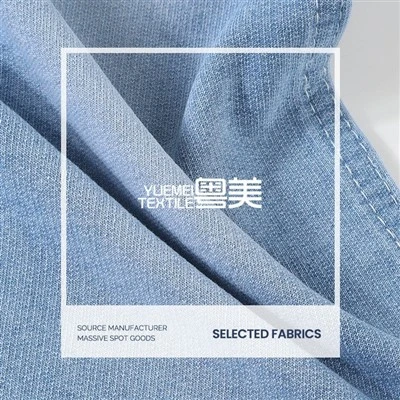
At the end of the day, the question “Can you modify no-wash denim jeans?” isn’t just a yes or no—it’s about how you modify them. As a supplier who’s built our business on making sustainable denim accessible, we’re passionate about helping brands and customers create products that are both unique and eco-friendly. No-wash denim doesn’t have to be rigid or unchangeable; it’s a canvas, as long as you use the right tools and respect the process. If you’re ready to discuss modifying your no-wash denim line, reach out to our team directly to explore your options.
Melange Fabric REFERENCES
International Denim Manufacturers Association, 2024 Global Denim Sales Report
United Nations Industrial Development Organization, 2023 Textile Water Usage Report
Denim & Sustainability Alliance, 2024 No-Wash Denim Production Guidelines
Guangzhou Yuemei Textile Co., Ltd.
Guangzhou Yuemei Textile Co., Ltd. is one of the most experienced no-wash denim manufacturers and suppliers in China. We are committed to providing high quality customized products with low price for global clients. If you’re going to wholesale bulk durable no-wash denim made in China, welcome to get quotation and free sample from our factory.
Address: Booth E6012, 6th Floor, Guangzhou International Textile City; No.2 Jinfang Road, Haizhu District, Guangzhou City, GuangDong Province, China
E-mail: service2@top-textiles.com
WebSite: https://www.top-textiles.com/
