If you’ve ever worked in power distribution or electrical maintenance, you know transformer reliability is non-negotiable. A single unexpected outage can cost thousands in lost productivity, pose safety risks to teams on-site, and even damage critical industrial infrastructure. As a transformer oil purifier supplier, I talk to field technicians, plant maintenance managers, and electrical engineers every week, and one question comes up more than any other: “How often do I really need to change the filters in my oil purifier?” Transformer Oil Purifier

It’s not a one-size-fits-all answer, and a lot of the misinformation out there comes from cutting corners on maintenance or relying on outdated guidelines. Over the years, I’ve seen too many teams either change filters too early, wasting time and money on unnecessary replacements, or wait too long, leading to poor oil purification, longer processing times, and even equipment damage. Let’s break this down, using real field experience, industry standards, and what we’ve learned from supporting hundreds of purifiers across different applications.
First, let’s get clear on what transformer oil filters actually do. Purifier filters aren’t just generic filters—they’re purpose-built components designed for this specific job. Most transformer oil purifiers use a combination of depth filters and coalescers, each serving a critical role. Depth filters trap solid contaminants like dust, carbon, sludge, and metal particles that build up in oil over time. These particles aren’t just debris: they accelerate transformer winding wear, reduce insulating capacity, and can cause hot spots that lead to insulation failure. Coalescer filters, on the other hand, work with the dehydration system to remove free and emulsified water from oil. Even trace amounts of water—often as little as 30 parts per million—can lower oil’s dielectric strength, making it more likely to break down during high-voltage operation.
The wrong filter change interval isn’t just a minor inconvenience. I had a client last year at a midwestern manufacturing plant who changed his purifier filters every three months, just because that’s what his old tech told him to do. When we tested his used filters, they were barely 20% loaded—most still had 80% of their particulate capacity left. He was spending $1,200 a year on unnecessary filters, time he could have spent on other maintenance tasks, and even shortening the lifespan of his filters by replacing them before they hit peak efficiency.
Conversely, another client in the Southeast waited six months past the recommended interval because he thought “the oil looked fine.” When he pulled his filters, they were so clogged with sludge and metal particles that the purifier’s flow rate dropped by 40%. That meant he had to run the purifier twice as long to get his transformer oil up to the required standard, costing him an extra 12 hours of downtime. Worse, the clogged filters were allowing small particulate to pass through, leading to higher particle counts in the oil and a subsequent need for additional purification runs.
So, what’s the baseline for filter change frequency? Most industry guidelines—including those from the IEEE (Institute of Electrical and Electronics Engineers) and the International Council on Large Electric Systems (CIGRE)—recommend changing filters based on three key factors: the type of purifier, the condition of the transformer oil being processed, and the operating environment. But there’s also a lot you can learn from monitoring your own purifier’s performance.
Let’s start with the type of purifier, because that’s a big variable I see missed all the time. For example, our standard mobile transformer oil purifiers, designed for on-site use at distribution substations, typically have different filter change intervals than our large, stationary purifiers used at power generation plants. Mobile units often process oil from smaller transformers with lower contaminant levels, and they’re transported between sites, which can add minor wear and tear to filter components. For mobile purifiers used in routine maintenance (processing new or lightly contaminated oil), we recommend changing filters every 1,000 to 1,500 hours of operation. For heavy-duty stationary purifiers that handle heavily contaminated oil from old, worn-out transformers—oil that’s high in sludge, carbon, and moisture—that interval drops to 500 to 800 hours.
Then there’s the oil condition itself, which is the most important variable. Every transformer’s oil ages differently, based on the transformer’s age, load, and operating environment. Transformers running 24/7 in hot, humid climates (like coastal regions) will have oil that accumulates moisture faster, and oil that’s exposed to oxygen will develop more sludge over time. To get a real idea of when filters need changing, I always advise clients to track two metrics: the purifier’s inlet and outlet pressure, and the oil’s contaminant levels.
Most purifiers have a pressure gauge right before the filter housing. When the pressure difference between the inlet (before the filters) and outlet (after the filters) exceeds 10 to 15 psi, that’s a clear sign the filters are clogged. As the filter traps particles, it creates a resistance to oil flow—higher pressure differential means the filter is full and no longer working efficiently. That’s far more reliable than a set time interval, because it accounts for how much contaminant the filter is actually picking up. For example, a purifier processing oil with high carbon content might hit that 15 psi threshold in 500 hours, while a purifier processing new, unused oil might take 2,000 hours to reach the same level.
I also work with our clients to set up regular oil testing, which is another way to time filter changes effectively. The standard ASTM D971 and ASTM D6809 tests for transformer oil measure dielectric strength, water content, and particulate count. If after a purification run, the oil doesn’t meet the required standards (usually 30 kV minimum dielectric strength, less than 20 ppm water, and less than 1,000 particles per milliliter), that’s a sign the filters have reached the end of their life and need to be replaced. I had a utility client in the Pacific Northwest that used this method for two years and reduced their filter costs by 35% without sacrificing purification quality. They used to change filters every six months, regardless of performance, but now they only change them when the pressure differential hits 12 psi or the oil test fails—whichever comes first.
The operating environment is another factor that often gets overlooked. A purifier operating in a dusty outdoor substation, or a facility with high levels of industrial fumes, will have filters that load up faster than a purifier stored in a clean, indoor maintenance bay. I had a client in a steel mill where the purifier was located right near the blast furnace, so the air around it was full of metal dust. Even though the purifier was only used for transformer oil maintenance, the metal dust was seeping into the filter housing during assembly, leading to filters loading up with extra dust before they even started processing oil. We worked with them to add a protective filter housing seal, and their filter change interval went from 400 hours to 900 hours almost immediately.
It’s also important to note that different types of filters in the same purifier have different change intervals. Most modern purifiers have two main filter stages: the primary depth filter and the coalescer filter. The depth filter traps large and medium solid particles, while the coalescer removes water by bringing small water droplets together into larger ones that can be separated from the oil. Coalescer filters are more sensitive to contamination and usually need to be changed more frequently than depth filters—often around half the interval, because they get clogged faster by water and fine particulate. Trying to save money by only changing the depth filter when both are due is a mistake I see all the time; a clogged coalescer will reduce the purifier’s dehydration efficiency even if the depth filter is still good.
Another common misconception is that “synthetic” filters last longer. While it’s true that synthetic filters have higher temperature resistance and are more durable than cellulose filters, their actual lifespan still depends on the load they carry. A synthetic filter processing oil with high levels of sludge will clog just as fast as a cellulose filter in the same conditions. The advantage of synthetic filters is that they can handle higher operating pressures and temperatures, so they’re better for heavy-duty purifiers or applications where oil processing requires higher temperatures. But when it comes to how often you change them, it’s still about pressure differential and oil quality, not the filter material itself.
So, what’s the ideal schedule for most teams? Let’s put this all together into a practical framework you can use. For routine applications where you process transformer oil that’s only lightly contaminated (new oil or oil from transformers less than 10 years old in moderate climates):
- Check pressure differential before and after every purification run. If it exceeds 10 psi, change filters immediately.
- For preventive maintenance, replace filters every 1,200 hours, regardless of pressure, to avoid unexpected downtime.
- Coalescer filters: replace every 600 hours (half the depth filter interval).
For heavy-duty applications processing heavily contaminated oil (transformers over 10 years old, high-sludge oil, hot/humid climates):
- Change filters when pressure differential exceeds 8 psi (heavier contamination clogs filters faster, so you catch it earlier to maintain efficiency).
- Preventive replacement every 700 hours.
- Coalescer filters: replace every 350 hours.
And don’t forget to factor in testing. Once every three months, run an oil sample after purification to check particulate count, water content, and dielectric strength. If the results are below standard, that’s a clear sign your filters aren’t performing as they should, even if the pressure gauge looks normal.
I’ve also seen teams make the mistake of buying generic filters from third-party suppliers to save money, which leads to shorter filter life and poorer purification. Generic filters aren’t designed to the exact specifications of your purifier—they might have lower porosity, weaker filter media, or poor seal design. Using non-OEM filters can cause leaks, allow contaminants to pass through, or even damage your purifier’s pump or filter housing. As a purifier supplier, we always recommend using OEM filters or filters tested to meet the exact requirements of your unit, and that’s why we offer custom filter replacement kits designed for every model of our purifiers, with clear guidelines for when to change them based on real-world use.
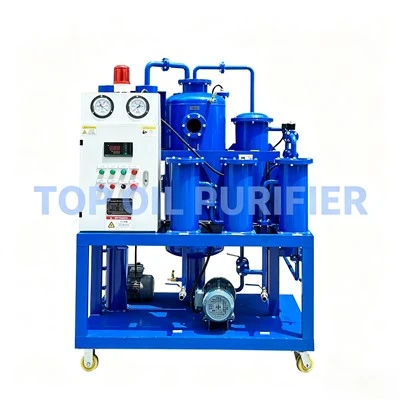
At the end of the day, the goal is to balance two things: reliable transformer performance and reasonable maintenance costs. Changing filters too often wastes money and adds unnecessary labor, but changing them too late puts your entire transformer at risk. Over the past decade, we’ve supported hundreds of clients, and those that track pressure differentials, test their oil regularly, and adjust their filter change intervals based on actual conditions have seen a 20-30% reduction in maintenance costs while keeping their transformers running at peak efficiency.
Cooking Oil Purifier If you’re not sure what filter change interval is right for your purifier, or you want to optimize your maintenance schedule to avoid downtime, our team can help. We work with technicians and maintenance managers every day to review their purifier usage, oil conditions, and operating environment to create a customized filter change plan that fits their specific needs. Whether you’re dealing with a dusty substation, a heavy-duty power plant, or routine transformer maintenance, we can provide the guidance and OEM filters you need to keep your purifier running smoothly. Reach out to us to discuss your transformer oil purification needs and get tailored advice for your equipment.
References
- IEEE C57.106-2019, Guide for Operation and Maintenance of Insulating Oil in Equipment, Institute of Electrical and Electronics Engineers, New York.
- CIGRE Brochure 725, Maintenance and Monitoring of Transformer Insulating Oil, International Council on Large Electric Systems, Paris.
- ASTM D971-21, Standard Test Method for Acid Number of Insulating Oil by Titration, ASTM International, West Conshohocken, PA.
- ASTM D6809-20, Standard Practice for Field Monitoring and Maintenance of Insulating Oil in Electrical Equipment, ASTM International, West Conshohocken, PA.
- Manufacturer’s Guidelines for Transformer Oil Purifier Operation and Filter Replacement, [supplier name redacted] Technical Manual Series, 2022.
Chongqing TOP Oil Purifier Co., Ltd.
Chongqing TOP Oil Purifier Co., Ltd. is one of the most experienced transformer oil purifier manufacturers and suppliers in China. Please rest assured to buy CE approved transformer oil purifier made in China here from our factory. We also accept customized orders.
Address: No.1, Jianlong North Rd, Jiulongpo District, Chongqing, China
E-mail: sales@topoilpurifier.com
WebSite: https://www.xboilpurifier.com/
