If you’ve ever walked through a modern electronics assembly line, a pharmaceutical packaging facility, or a food processing plant, you’ve likely seen one of the most underappreciated workhorses of industrial automation: the pick and place robot. For decades, these systems have been the backbone of repetitive, high-speed material handling, moving tiny computer chips or crates of snack food with precision that human hands can’t match. But if you’ve dug a little deeper into automation needs, you might have heard the term “3D pick and place robot” thrown around—and wondered how it’s different from the basic 2D pick and place units that have been around for decades. As someone who’s been supplying industrial pick and place systems for over a decade, I get a lot of questions about this technology, and not just from engineers looking to upgrade their lines. Business owners, plant managers, and operations leads often come to me confused about why a 3D system is worth the investment, especially when 2D pick and place robots work fine for so many common tasks. Let’s break this down in plain terms, no overly complex jargon, just real-world context that makes sense for anyone looking to automate their operations. Pick and Place Robot
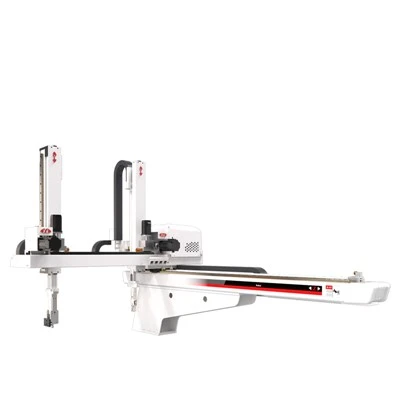
First, let’s start with the basics: what a pick and place robot does, period. At its core, a pick and place robot is an industrial robot designed to “pick” items from one location—say, a conveyor belt, a tray of components, or a bin full of parts—and “place” them in another: a packaging box, a circuit board assembly station, or a shipping pallet. The key here, historically, has been the robot’s ability to repeat that action thousands of times an hour with consistent speed and accuracy, far more reliably than a human worker, especially for tasks that are repetitive, require strict precision, or are in environments that are hot, dirty, or unsafe for people. Early pick and place systems were strictly 2D, meaning they could only move items along a flat, two-dimensional plane: left and right, forward and backward, up and down, but no rotation or adjustment for variations in how parts sit when they arrive at the pick point. That works great for a lot of simple tasks, like picking identical, perfectly aligned bottles from a conveyor to pack into boxes, or placing the same size and shape of microchips onto a circuit board where their exact position is marked. But as manufacturing has gotten more complex, that’s where the limitations of 2D systems start to show.
A 3D pick and place robot solves those limitations by adding two critical capabilities that 2D systems lack: depth perception and rotational movement. Let’s use a common example to make this concrete. Imagine you’re running a small electronics assembly shop that uses 2D pick and place robots to mount resistors on circuit boards. Your resistors arrive in trays where each one is pressed into a fixed slot, perfectly aligned, so a 2D robot can lock into the exact x and y coordinates of each resistor, pick it up, and place it without any issues. Now, what if your component supplier starts sending resistors in bulk bins instead of aligned trays? Suddenly, each resistor is lying at a different angle, flipped upside down, or partially covered by another component. A 2D pick and place robot can’t adjust for that—its camera only sees the flat surface of the bin, so if a resistor isn’t sitting in the exact spot and orientation it’s programmed for, the robot will either miss the part, damage it, or place it incorrectly. A 3D pick and place robot, on the other hand, uses multiple cameras, often with stereo vision, or advanced 3D laser scanning to create a full volumetric image of the bin or conveyor. It can see not just where a resistor is on a flat plane, but how far it is from the camera, its exact angle, and whether it’s obscured by another part. Then, it adjusts its movement in real time, rotating its end effector (the tool that grips the part) to line up with the resistor, reaching around any overlapping parts to pick only the correct one, and placing it precisely on the circuit board—all at a speed that keeps up with your production line.
That ability to handle unstructured or variable parts is what makes 3D pick and place robots a game-changer for so many industries that 2D systems can’t serve well. Let’s talk about real use cases, because I’ve installed these systems for clients across different sectors, and the differences play out very differently in each. For the food and beverage industry, for example, 3D pick and place robots are used to handle everything from fresh produce to packaged snacks. Fresh apples don’t arrive on a perfectly aligned tray—each one is a slightly different size, shape, and orientation, rolling down a conveyor at random. A 2D system can’t pick just one apple without knocking over the ones next to it, but a 3D robot can scan each apple, determine its unique coordinates and orientation, pick it up with a gentle vacuum grip, and place it into a produce box without bruising. For pharmaceutical manufacturers, 3D pick and place robots handle tiny, delicate vials or blister packs that can shift during transport, ensuring each part is placed correctly in packaging for safety and regulatory compliance. Even e-commerce fulfillment centers use these systems now to sort packages of different sizes, shapes, and weights, picking them from rolling carts and placing them into delivery bins far more efficiently than legacy conveyor systems.
Now, I know what some of you are thinking: 2D systems are cheaper, right? That’s a valid concern, and it’s one I hear from clients all the time when we first start talking about 3D options. For simple, high-volume, low-variability tasks, a 2D pick and place robot will always be the more cost-effective upfront choice. If you’re a beverage company that only bottles 12-oz soda in identical, perfectly labeled bottles, running 24/7 on a fixed line with no plans to change your packaging or products, a 2D system will do the job reliably for years, with a lower initial investment and simpler programming. But here’s the catch: the manufacturing and industrial landscape isn’t as static as it used to be. More brands are offering custom products, smaller production runs, and more flexible supply chains. A client I worked with last year was a small toy manufacturer that was using a 2D pick and place robot to assemble action figures, but when they launched a new line of 10 different figures, each with slightly different components that didn’t fit the fixed trays their old system used, they had to pause production for weeks to retool their 2D line—costing them tens of thousands in lost sales. When they switched to a 3D pick and place robot, they were able to reprogram the system themselves in a single day, no outside engineering help, and adapt to different component sets in hours, not weeks. That flexibility pays for itself quickly, even if the upfront cost is higher.
Another key advantage of 3D pick and place robots is accuracy, especially in tasks that require handling parts with precise depth requirements. A lot of industrial tasks need parts to be placed not just in the right x and y position, but at the exact right height, to fit into a slot or connect with another component. For example, when assembling phone screens, the screen has to be placed at a precise depth on the frame to ensure the adhesive bonds correctly, and no 2D robot can measure that depth accurately. A 3D robot’s ability to capture volumetric data means it can adjust its gripper’s height in real time, ensuring each part is placed within a fraction of a millimeter, which is non-negotiable for electronics manufacturing where a small misalignment can ruin an entire product.
Of course, no technology is perfect, and 3D pick and place systems have their own set of considerations that need to be weighed before investing. The programming is more complex, though modern systems have user-friendly interfaces that eliminate a lot of that friction. The maintenance is slightly higher, as the 3D cameras and scanners need regular calibration to ensure accurate readings, and the end effectors are often more advanced to handle variable parts. But for most clients, those considerations are far outweighed by the long-term flexibility, productivity, and cost savings that come with adapting to changing production needs.
Let’s also clear up a common misconception: 3D pick and place robots aren’t just for large corporations with huge production lines. I’ve supplied systems to small and medium-sized businesses with only two production lines, and even a bakery that needed to automate the handling of custom cookie shapes for local cafes. The key is matching the system to your specific needs, not just buying the most advanced technology on the market. If you’re a small business with a single, fixed production line that only handles one type of product, a 2D system is probably the right call. If you’re looking to scale, adapt to new products, or handle parts that come in variable shapes or orientations, a 3D pick and place robot is a smart investment that will grow with your business.
Over the past 10 years, I’ve seen firsthand how 3D pick and place technology has transformed small businesses that were on the brink of losing contracts because they couldn’t keep up with custom orders. I had a client a few years ago that made custom electronic components for medical device manufacturers. Their old 2D system couldn’t handle the variety of small, irregular parts required for custom orders, so they were turning away 30% of their potential business. When they installed a 3D pick and place robot, they were able to take on every custom order, reducing their lead times by 40% and increasing their revenue by 65% in the first year. That’s the kind of impact this technology has, beyond just speeding up production—it’s about opening up new possibilities for businesses that want to grow without investing in more labor or larger facilities.
Another thing I want to emphasize is that this technology isn’t just for new production lines. A lot of clients come to me looking to retrofit their existing lines with 3D pick and place robots, which is often much more cost-effective than building a new line from scratch. We can integrate 3D vision systems and grippers into your current 2D robot setup, giving you the flexibility of a 3D system without the cost of a full replacement. That’s a big selling point for businesses that want to upgrade their automation without disrupting their current operations.
Let’s also talk about the future of 3D pick and place robots, because this technology is only going to get more capable and accessible. New advances in AI are making these systems even smarter, able to identify and handle parts that are even more irregular, learn from new parts without needing full reprogramming, and adjust for variations in parts from different suppliers. Soon, we’ll see 3D pick and place robots that can handle entire bins of mixed parts, sorting and placing them correctly without any human input, which will revolutionize how small components are handled in manufacturing and warehousing. For clients, that means even more flexibility, lower operational costs, and the ability to take on even more diverse orders.
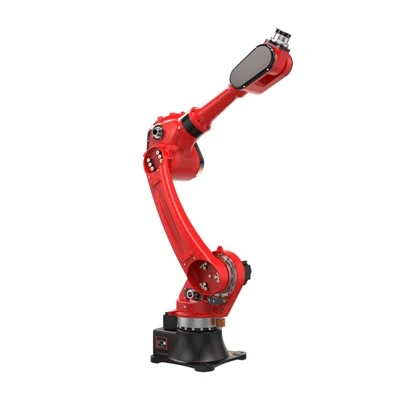
At the end of the day, whether you need a pick and place robot that can handle simple, high-volume tasks or complex, variable production, the question isn’t whether automation is right for your business—it’s which type of automation fits your needs. 3D pick and place robots aren’t a replacement for 2D systems, but they’re a complementary option that opens up new possibilities for businesses that want to grow, adapt, and stay competitive in an increasingly fast-paced market. If you’re tired of being limited by your current automation, or if you’re ready to scale your operations without the headaches of retooling every time you change a product or supplier, a 3D pick and place robot might be exactly what you need. I’ve helped hundreds of businesses across industries find the right automation solutions, and I’d be happy to walk through your specific needs, answer any questions you have, and help you determine if a 3D pick and place robot is the right fit for your operations. Don’t let outdated automation hold your business back—reach out to start a conversation about your automation goals today.
Palletizing Robot References:
- Industrial Automation Association. (2022). The State of Pick and Place Technology in Modern Manufacturing.
- International Society of Automation. (2021). 3D Vision Applications for Material Handling in Food and Pharmaceutical Industries.
- Robotics Industries Association. (2023). Flexible Automation Solutions for Small and Medium-Sized Enterprises.
- Wang, L., et al. (2022). Advances in 3D Pick and Place Robots for Unstructured Bin Picking. Journal of Manufacturing Systems, Vol. 64, pp. 212-225.
- Food and Drug Administration. (2020). Automation Solutions for Compliance in Pharmaceutical Packaging Operations.
Robotic Technology (GD) Co., Ltd.
Robotic Technology (GD) Co., Ltd. is one of the most experienced pick and place robot manufacturers and suppliers in China, also supports custom service and one year warranty. Please feel free to wholesale CE approved pick and place robot for sale here from our factory. Contact us for quotation.
Address: Room 102, No. 30,Hengfeng 2nd Road,Daguo, Changping Town, Dongguan City,Guangdong,China
E-mail: admin@iroboticplus.com
WebSite: https://www.rb-tic.com/
