Hey guys, let’s cut to the chase—if you’re a farmer, landscaper, or even someone with a big piece of property, you’ve probably stared at your tractor and thought, “Wait, can this thing actually dig? Not just plow straight lines or haul hay bales, but real digging? Like post holes for a new fence, trenching for a septic line, even moving rock piles from a new garden spot.” As a tractor supplier who’s fielded this exact question a hundred times over coffee with customers, I’m here to break this down like we’re chatting by the parts counter, not writing a textbook. Tractor
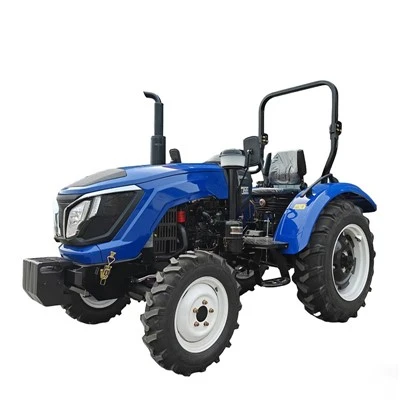
First off, let’s get one thing straight: tractors aren’t just for driving around and looking tough (though they do that great, let’s be real). Digging is one of their most underrated superpowers—if you pair ’em with the right gear. A lot of new owners think you need some fancy, separate excavator to do any serious digging, but that’s not true. Tractors have the power, the torque, and the stability to move way more dirt than you’d guess, as long as you match the implement to the job and use the right size tractor for the task.
Let’s start with the basics. What makes a tractor good for digging? It’s all about three things: horsepower, weight, and three-point hitch capability. Horsepower is non-negotiable—you don’t want a tiny 25HP lawn tractor trying to dig a 6-foot post hole; that’ll just leave you huffing and sighing and calling a real excavator halfway through. But weight matters more than people give it credit for. Tractors are built low to the ground, with a heavy front end (that’s for balance when you’re hauling, but it also stops ’em from tipping backward when you’re yanking a digging implement into the dirt). Compare that to a backhoe, which is lighter in the front, and you get the idea—tractors have that built-in stability for digging, no extra weights needed half the time.
Now, the fun part: what implements do you actually attach to a tractor to dig? I’m not talking about those tiny hand shovels you can clip on (though those exist, for super small jobs). Let’s go through the most common ones, because this is where most folks get confused.
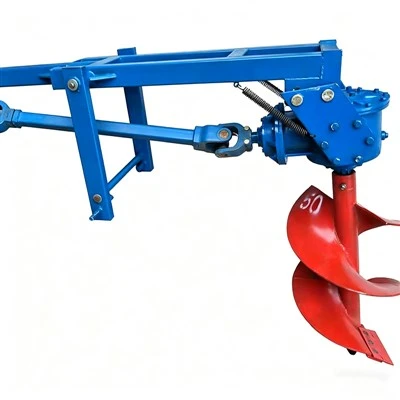
First up: post hole diggers (or post hole augers, if we’re being technical). This is the most popular digging attachment, no contest. They’re basically a big spiral drill bit that spins, and you mount ’em to the back of your tractor’s three-point hitch. For small jobs—like a 1/2-acre yard with 10 fence posts—you can run a 30-40HP compact tractor with a 12-inch auger, and you’ll have holes dug in 2 minutes flat, no sore back needed. For bigger stuff—like 15-foot tall fence posts for a livestock pasture, or even small fence posts for a driveway gate line—you step up to a 50-70HP tractor with a 18-24 inch auger, and that’ll chew through clay, sandy loam, even soft rock if you get the right bit. The key here is matching the auger size to your tractor’s PTO (power take-off) rating. If your tractor only puts out 50HP at the PTO, don’t buy a 30HP auger that’s way too heavy—you’ll stall the engine before you dig 6 inches.
Next, trenching. Trenching for utility lines, drainage ditches, or that new sprinkler system? You use a tractor-mounted trencher. These are heavy-duty, chain-style implements with teeth that dig a narrow, deep trench—usually 12-48 inches deep, depending on the model. A lot of people don’t realize that for residential or small farm trenching, a mid-size tractor (60-90HP) paired with a compact trencher is way cheaper than renting a mini excavator, and you’ll get way more done in an afternoon. I had a customer last year who used his 75HP tractor and trencher to dig a 100-foot trench for a new septic line—took him 3 hours, vs. the 2 days the local excavator quoted him, and he saved like $800. That’s the kind of win we live for.
Then there’s the big daddy: backhoes. Wait, a lot of people call these “tractors with backhoes,” and technically, a backhoe loader is a type of tractor—one that has a loader on the front and a backhoe on the back. These are for serious digging: moving large piles of dirt, digging foundation trenches, digging swimming pool holes, even clearing out old ponds. A good mid-range backhoe tractor (80-120HP) can dig down 14 feet deep, lift 2,000 pounds of dirt, and maneuver around tight spots way better than a full-size excavator. I’ve seen these things dig a foundation for a 1,200 square foot cabin in a single day—no joke. The only catch here is that backhoe tractors are a bit bigger, so if you’ve got a tiny property with tight spaces, a compact tractor with an auger or trencher is probably better.
But hold up—before you run out and attach an auger to your tractor, there are some do’s and don’ts you need to know, because digging with a tractor isn’t just “clip and go.” Let’s get real about safety and common mistakes.
First, know your limits. I once had a guy come in with a beat-up 28HP compact tractor, swearing he was gonna dig a 4-foot deep post hole for a 10-foot tall deer fence. He tried the 18-inch auger, stalled the engine, tipped the tractor back (thankfully he had safety bars up, so he didn’t get hurt, but the tractor took a scrape). Lesson number one: check your tractor’s PTO rating and the implement’s weight. If it’s too heavy, you’ll either stall, tip, or break something—costing way more than hiring a pro for that one big post hole.
Second, always check for utilities before you dig. This is non-negotiable, no matter how small the job is. Call your local utility company, have them come mark gas, electric, water lines—whatever’s buried in that spot. I can’t tell you how many customers have told me they almost drilled into a gas line or hit a water main with their auger. It’s not worth the risk, period.
Third, take it slow when you’re digging. Don’t crank the auger all the way and floor the tractor. Let the bit do the work—spinning too fast just makes it clog with dirt, or even snap the auger. Same with trenching: don’t push the trencher too hard, or you’ll bend the chain or stall the engine. Patience pays off here.
Wait, also—what about different types of soil? That makes a huge difference, right? If you’re digging in soft, sandy loam, that’s easy—any mid-size tractor will work. If you’re in heavy clay, or even rocky soil, you need a bit with better teeth, or a more powerful tractor. I had a customer in Iowa last year who was digging post holes in super heavy glacial clay—he had a 60HP tractor, but his old auger bits were just sliding around. He switched to carbide-tipped auger bits, and boom—problem solved. If you’re in rocky soil, you might even need to add weight to the back of your tractor (like ballast boxes filled with water or concrete) to keep it from bouncing, so the auger bites into the rock instead of just skidding over it.
Now, let’s talk about when a tractor isn’t the right tool, just to be fair. If you’re digging something super deep—like a 10-foot foundation for a big commercial building, or a 6-foot deep swimming pool that’s 20×40 feet—you might need a full-size excavator. Tractors are great for medium to small digging jobs, for residential properties, small farms, landscaping, etc. If you’ve got a big job and tight access, a compact backhoe tractor is better than a big excavator that can’t turn around in your driveway. If you’ve got super large rocks that the tractor’s auger can’t break, you might need a jackhammer or an excavator. But for 90% of the digging jobs our customers bring to us, a tractor works perfectly.
As your tractor supplier, let me give you a little insider tip: a lot of people buy a tractor just for plowing or hauling, then realize they can add a digging implement and get way more use out of it. We see this all the time—customers come in looking for a 40HP tractor for mowing, then leave with a 40HP tractor plus a post hole digger, and say “I didn’t realize this could dig, too.” It’s a game-changer for small property owners, because you don’t have to rent separate equipment for every job.
Wait, let’s also mention compact utility tractors (CUTs) for all the tiny property folks. If you’ve got an acre or less, a 25-40HP compact tractor is perfect for digging small post holes, trenching for a sprinkler line, moving small piles of dirt. You don’t need a big, loud tractor for that—those compact ones are easy to maneuver, fit through gates, and still have enough power for digging. I had a customer with a 0.75 acre yard who used his 30HP CUT with a post hole digger to put up a whole backyard fence—12 post holes, done in an hour, no back pain. That’s the kind of value I love to see.
Now, if you’re thinking about getting a tractor for digging, what should you look for? First, assess your biggest digging job. If you’re just doing small fence posts and sprinkler lines, a 30-45HP compact tractor will do. If you’re doing trenching or larger post holes, go 50-70HP. If you’re thinking about a backhoe for big digging jobs, go 80HP or more. Second, make sure the tractor has a reliable three-point hitch and PTO—those are non-negotiable for all digging implements. Third, ask for advice from your supplier (that’s us, hi!)—we’ll help you match the right tractor and implement, so you don’t buy something too big or too small.
At the end of the day, the answer to “Can a tractor be used for digging?” is a resounding yes—with the right gear, the right tractor size, and a little know-how, it’s one of the most versatile tools you can own. I’ve been in the tractor business for 12 years, and I still get excited when a customer comes back and tells me they used their new tractor to dig post holes, trench a line, and haul 10 tons of gravel all in the same week. That’s the magic of a good tractor—it’s not just one-trick pony.
If you’re ready to stop renting digging equipment and get a tractor that can do it all, hit us up to chat about your needs. We can walk you through the different models, figure out the right implements for your property, and make sure you get something that works for you, not just the sales pitch. Don’t hesitate to reach out—we’re here to help, not just sell tractors.
Tractor References:
- Tractor Implement Manufacturers Association. "Compact Tractor Attachment Guide." 2022.
- USDA National Agricultural Statistics Service. "Small Farm Equipment Usage Trends." 2023.
- International Society of Soil Science. "Tractor Performance in Different Soil Types for Digging Operations." 2021.
Sevol International Trade (Shandong) Co., Ltd.
As one of the most professional tractor manufacturers and suppliers in China, we’re featured by quality products and good price. Please rest assured to buy advanced tractor for sale here from our factory. We also accept customized orders.
Address: 1210, Building 13, No. 13129, Yingqian Street, Liyuan Street, Kuiwen District, Weifang City, Shandong Province
E-mail: Savotrak@163.com
WebSite: https://www.sevol-global.com/
